Anglophone crisis looms over Cameroon’s presidential election

news image

Yaounde, Cameroon – On the morning of October 7, eight of Cameroon’s 10 regions will vote in a presidential election that could end the long-running leadership of Paul Biya, who has been in office since 1982 and was prime minister in the seven years before that. 

Dissidents in the remaining two regions – the South West and North West – home to Cameroon’s English-speaking minority, have threatened a showdown.

“There is localised violence in the Anglophone regions … more than 1,000 men have pledged to dislodge the elections in those regions by violence,” says Hans de Marie Heungoup, senior analyst for Central Africa at the International Crisis Group.

Besides fighting by Boko Haram in the Far North and North regions and rebel incursions from the Central African Republic into the Eastern region, Cameroon is largely beset by the Anglophone crisis, a separatist uprising with roots in the pre-World War I era when it was a German colony.

“We are very much on the brink of a civil war,” said Kah Walla, who is from an Anglophone region.

She is the leader of the Cameroon People’s Party (CPP), but the group declined to put forward a candidate for the coming vote.

“Separatist groups have gotten to a stage where they control some territory and have promised violence if the authorities attempt to hold elections there and government has vowed to hold elections there. So the population is caught in the middle.”

Southern Cameroons became German Kamerun in 1885, eventually transiting to joint French and British administration. Opting not to join Nigeria as it sought independence in 1961, it instead joined the French Cameroons, which had already gained independence a year earlier.

By 1972, the federal republic of Cameroon had become a unitary state; while the south kept its English laws and academic system, the rest of the country stuck to the French legal system and the baccalaureate schooling alternative.

There are now complaints of marginalisation and a dearth of infrastructure in those English-speaking provinces, despite being home to the oil that accounts for 40 percent of the country’s GDP. People looking to go from Mamfe to Akwaya in the same region, for instance, travel through a Nigerian border town before returning to Cameroon – a journey that could take as long as a day – because of the roads’ terrible condition.

The elections won’t be free and fair. The system is already rigged to give the president a structural advantage.

Kah Walla, Cameroon People’s Party leader

Rising tensions and subsequent protests caused by these divisions snowballed spectacularly in 2016.

At least 400 people have died so far. A further 20,000 people have fled into neighbouring Nigeria as their villages were razed. Schools have been closed and a three-month internet shutdown was enforced in those provinces, forcing a few hundred untrained secessionist fighters to group and arm themselves against a military crackdown.

A recent poll by GICAM, Inter-Patronal Grouping of Cameroon said more than 6,000 jobs have been lost to the crisis. In the Northwest region, a dusk-to-dawn curfew has been imposed.

Thousands have fled both provinces, moving to stay with friends and relatives elsewhere nationwide after threats by separatists who are expected to begin taking up arms in the days leading up to the elections. 

Others remain trapped in their hometowns or in informal camps for displaced people in host communities. 

Barely a week ago, Bernard Bilai, the Southwest governor, went with a party of gendarmes to a popular motor park in Buea, capital of the region, to ask panicked people gathered there to remain.

Despite violence inflicted on them by both the military and rebel troops, many in the Anglophone areas are sympathetic to the secessionist cause, although this support is not voiced, say experts. 

Early this year in Abuja, the Nigerian capital, the self-declared leader of the separatist agenda, Julius Ayuk Tabe, was arrested with nine others and has since being extradited to Cameroon for trial on charges of treason.

Who is running?

Eight presidential candidates are angling to retire Biya, who is seeking a fresh seven-year mandate in what could be his seventh term.

The frontrunners include Joshua Osih of the main opposition Social Democratic Front and Akere Muna, a veteran lawyer, former vice president of Transparency International and son of a former vice president of the Federal Republic of Cameroon running with the Front Populaire Pour Le Developpement (FPD).

Both are from the English-speaking provinces.

Akere Munna is 66 years old and believes it is time for Cameroon to be run by someone from the Anglophone regions [Max Mbakop/Al Jazeera]

There is also Maurice Kamto, who leads the Mouvement pour la Renaissance du Cameroun (MRC) party. He was justice minister during the 2008 constitutional amendments that revised presidential term limits and led the legal team in negotiations with Nigeria over the disputed Bakassi peninsula in the early 2000s. He has a strong following in the west of the country, where he hails from. 

Most young people seem to favour Cabral Libii, an eloquent 38-year-old journalist with Univers Party and law lecturer at the University of Yaounde II. 

Kamto and Libii have roots in the Francophone regions.

Key issues

In 2014, Transparency International ranked Cameroon 136 out of 175 countries in a corruption index. An estimated 48 percent of Cameroon’s population lives below the poverty line. 

In March, 85-year-old Biya – who reportedly presides over the country’s affairs while living in a five-star hotel in Geneva, more than 6754km away from the presidential palace in Yaounde – held his first cabinet meeting in three years. 

“The key issues include unemployment and underemployment, which is generally seen as more important and sensitive than the Anglophone crisis to some of the candidates,” says a technocrat who requested anonymity out of fear of being targeted by the authorities.

Political reforms, such as issues relating to staying a federation and changing presidential term limits, are also on the table.

“It’s time for a change,” the technocrat continues. “We’ve never had this many good candidates at once. 

“Osih has deep political experience from his time in parliament; Muna has international experience. Same with Kamto. 

“While I don’t rule out a coalition happening between the candidates post-elections … I don’t see the possibility of a coalition happening before the elections.” 

The end of Biya?

It remains a tall order to dislodge the strongman of Cameroonian politics, experts and analysts say, warning that voter apathy and presidential gimmicks will be at play.

Presidential candidates have been made to pay a CFA 30million ($52,100) caution fee – to guarantee they won’t encourage their supporters to violence – and were given half that amount by the government to fund their campaigns barely two weeks before the elections.

“The elections won’t be free and fair,” says Walla, the CPP leader from the Anglophone region. “The system is already rigged to give the president a structural advantage. The minister of Territorial Administration, whose ministry supervises the elections, is a diehard Biya fan. Many of the district officers in the ministry who will count votes are helping relaunch Biya’s book on his political philosophy, so there is no line between the civil service and politics.”

Biya controls the police and military forces and has substantive influence over the electoral commission; he regularly appoints its chief. Its board members only quit their ruling party membership the day their appointments were announced.

President Paul Biya, 85 and one of Africa’s longest-serving leaders, vows to hold the largely Francophone country together even as thousands flee violence in Anglophone regions [File: AP Photo/Sunday Alamba]

The president also appoints all judges in the country.

Members of the electorate have little faith in the biometric reader system put in place for the election and do not expect Biya to concede in the unlikely event of a loss.

Local media is also suspect, recently reporting a story about Ennovate Solutions, a supposed American election-monitoring organisation, predicting a landslide victory of 81 percent for the incumbent. The firm turned out to be a web design firm owned by a relative of Paul Nji, Biya’s minister of territorial administration.

Biya still has a strong base especially among his Beti kinsfolk, one of the major ethnic groups.

Serge Alomomou, a taxi driver in Yaounde, is one of them and blames French colonialists for the country’s problems. 

“Every country has its own problems and we signed a lot of contracts with the French at independence that put us in this mess. I trust Biya and he knows the best for us, he knows us more than the people who want to try and replace him. It is those working around him that mess up his efforts.”

‘Mounting hate speech’

Over the past year, hate speech has risen. 

A petition against controversial TV host Ernest Obama surfaced online last October over his frequent outbursts against the Anglophone community.

In June, Prime Minister Philemon Yang blamed Cameroonian citizens in the diaspora for inciting their compatriots to violence on social media over the Anglophone issue. 

Kamto, the candidate and former justice minister, has lambasted TV host Obama’s channel, Vision 4. He pulled out of a debate on the network because, he wrote on Facebook, it “promotes division and hatred among Cameroonians, particularly against the innocent English-speaking Cameroonian population trapped between secessionist activities and security forces”.

The MRC party chief has himself been accused of stoking tribal tensions between his own Bamileke people and Biya’s Beti people, two of Cameroon’s major ethnic groups. 

“There are ethnic and political tensions we can see mounting between the Bamileke and Beti ethnicities,” says Heungoup. “There is mounting hate speech and it is worrying because, in Cameroon, most of the candidates have regional bases, so what if any of them decides to reject the results?”

Read More

from Viral Eyes https://ift.tt/2ODsalU
via IFTTT

‘Devastating news from Florence’: 7 officers shot, 1 fatally, serving warrant in South Carolina

news image

CLOSE

A two-hour standoff in Florence County, South Carolina, between a male suspect and authorities led to seven officers being shot, killing one.
USA TODAY

FLORENCE, S.C. – A man barricaded himself and children in his home before opening fire on officers serving a search warrant, killing one officer and wounding six more during a lengthy and withering firefight that ended with the suspect’s surrender, authorities said.

Florence County Sheriff Kenney Boone said sheriff’s deputies serving the warrant, related to alleged sexual assault on a child by another person, had no idea they would encounter such furious firepower. Authorities used a bullet-proof military vehicle to collect their wounded during the rampage.

“Fire was being shot all over,” Boone said. “The way the subject was positioned, his view of fire was several hundred yards so he had an advantage.” 

Boone said Florence Police Department officers responded to assist deputies as the rampage roared on. Three county deputies and four city officers were shot before the suspect surrendered to a negotiator.

The fallen police officer was identified as Terrence Carraway, 52, a 30-year veteran of the department. The names of the six officers receiving medical treatment had not been released.

Florence Police Chief Allen Heidler, holding back tears, called the officers his “family” and asked that the public pray for their speedy recovery.

“Pray for the family who lost the bravest police officer that I have ever known,” Heidler added.

The confrontation also drew the attention of President Donald Trump, who extended “thoughts and prayers” via Twitter and added, “We are forever grateful for what our Law Enforcement Officers do 24/7/365.”

South Carolina Gov. Henry McMaster tweeted that “This is simply devastating news from Florence. The selfless acts of bravery from the men and women in law enforcement is real, just like the power of prayer is real.”

South Carolina Sen. Lindsey Graham tweeted that he was “heartbroken” over the shooting and added, “God bless those who choose to protect us and their families. We are keeping them in our prayers.”

lorence, a city in South Carolina’s northeastern corner home to roughly 37,000, sits at the convergence of Interstates 95 and 20. It’s the largest city in the region known as the Pee Dee, an area recently affected by heavy flooding in the wake of Hurricane Florence.

Contributing: The Associated Press

F


Read or Share this story: https://ift.tt/2O7aS12

Read More

from Viral Eyes https://ift.tt/2DYYmfd
via IFTTT

1 dead as N.C. meat producer recalls ready-to-eat ham products for listeria concerns

news image

CLOSE

Keep your food fresh (and cute) with these storage solutions.
Time

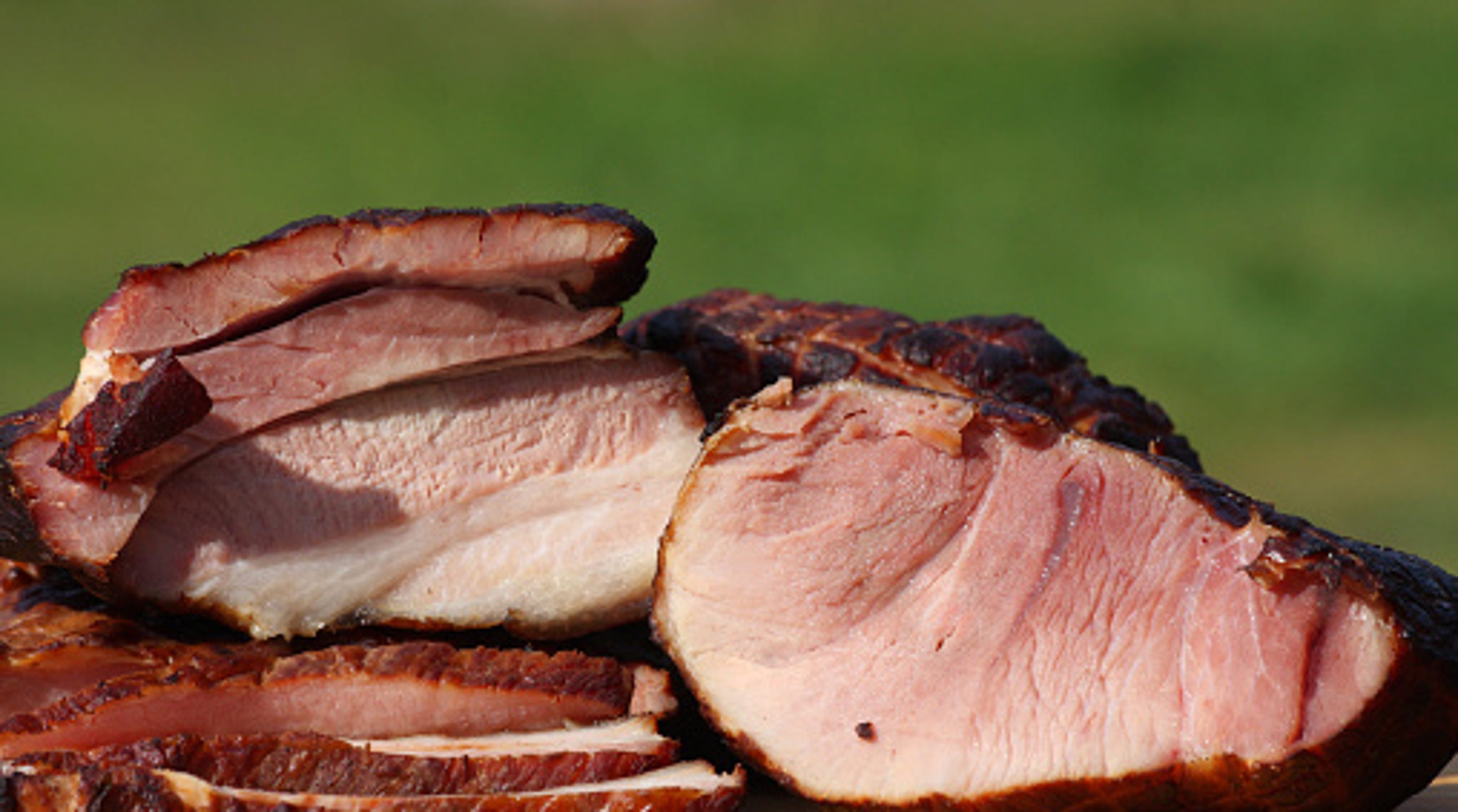
A North Carolina company is recalling more than 89,000 pounds of ready-to-eat ham products for possible listeria contamination that has led to one death and three illnesses.

Johnson County Hams of Smithfield, North Carolina, has recalled the products, produced between April 3, 2017, and Oct. 2, 2018, according to the Department of Agriculture. The ready-to-eat deli-loaf ham items, which weighed between seven and eight pounds, were shipped to distributors in North Carolina, South Carolina, New York, Maryland and Virginia.

An investigation by the Centers for Disease Control and Prevention, the USDA’s Food Safety and Inspection Service and state officials identified a link between one death and three illnesses and listeria monocytogenes found in deli ham produced at the company. The investigation, which is ongoing, found listeria cases occurring between July 8, 2017 and August 11, 2018, the USDA says.

More: 6.5 million pounds of beef recalled for possible salmonella contamination after 57 sickened

Listeriosis is a serious infection typically caused by eating food contaminated with the bacterium Listeria monocytogenes, the contaminant found in the ham.

An estimated 1,600 people get listeriosis each year, and about 260 die, according to the CDC. The infection is most likely to cause illness in pregnant women and their newborns, adults ages 65 or older, and people with weakened immune systems, the agency says.

The ham products were plastic-wrapped and carried one of five different labels including “Johnson County Hams Inc., Country Style Fully Cooked Boneless Deli Ham,” “Goodnight Brothers Country Ham Boneless Fully Cooked,” and “Padow’s Hams & Deli, Inc. Fully Cooked Country Ham Boneless Glazed with Brown Sugar.”

Hams labelled “Ole Fashioned Sugar Cured, The Old Dominion Brand Hams Premium Fully Cooked Country Ham” and “Premium Fully Cooked Country Ham, Less Salt, Distributed By: Valley Country Hams LLC” had specific sell-by dates from April 10, 2018 to Sept. 27, 2019.

The USDA, which was notified about an illness on Sept. 27, is concerned that some shoppers may have the ham products in their freezers. Consumers who bought the products should not eat them and, instead, should throw them away or return them to the store where they were purchased.

Consumers with questions about the recall can contact the company’s plant manager Rufus Brown at 919-934-8054. 

Follow USA TODAY reporter Mike Snider on Twitter: @MikeSnider.

Read or Share this story: https://ift.tt/2P5pPwW

Read More

from Viral Eyes https://ift.tt/2OGaIxe
via IFTTT

Global bond yields just exploded

news image

  • The lift in US yields helped to fuel strong gains in the greenback. In the past, the combination of higher US yields and dollar has not gone down well in emerging markets.

US bond yields are surging, hitting fresh multi-year or multi-decade highs on Wednesday as strong US economic data fueled expectations the US Federal Reserve will continue to lift official interest rates in the months ahead.

The yield on benchmark 10-year notes jumped to 3.18%, surpassing the previous year-to-date high of 3.12%. It now sits at the highest level since 2011. Just over a year ago, benchmark yields sat just above 2%.

Longer-dated bonds also sold off with the yield on 30-year debt climbing to 3.33%, the highest level in over four years. Reflecting a growing expectation that strong economic data and a tight labour market will continue to boost inflation, and with it the likelihood of further rate hikes from the Fed, yields on 2-year notes also hit the highest level in over a decade.

With longer dated yields increasing more than shorter-dated securities, the US yield curve steepened with the differential between 10 and 2-year yields lifting to 30.6 basis points, wider than the multi-decade low of 18 basis points struck in late August.

The lift across the US yield curve followed the release of what can only be described as incredibly strong US economic data during the session.

“The move higher in US Treasury yields… [was] triggered by a jump in the September ISM Non-manufacturing print to a new cycle high of 61.6 and the second highest in the history of the series,” said Rodrigo Catril, Senior FX Strategist at the National Australia Bank.

“The employment component of the report rose sharply as well, to its highest level since the survey’s inception in 1997.”

Adding to optimism over the outlook for labour market conditions, separate data on private sector hiring during September was also robust with payrolls increasing by 230,000, according to the ADP National Employment report, the largest increase since February.

“That helped raise expectations for tomorrow night’s payrolls report,” Catril said.

With US unemployment already sitting near multi-decade lows of 3.8%, and with signs that wage inflation is accelerating, the latest batch of US economic data has only acted to boost expectations for inflation and continued rate hikes from the Fed in the coming months.

According to the median FOMC member forecasts offered last month, the Fed expects to lift its funds rate one more time this year, and three times in 2019, significantly faster than the two hikes priced in by financial markets.

On current indications, it looks like the Fed’s outlook is more realistic, at least at this point, helping to explain the market reaction seen on Wednesday.

The spike in US yields helped to support a broad rally in the US dollar, weighing significantly on both the Australian and New Zealand dollar’s which fell by more than 1% for the session.

Higher yields also weighed upon US stocks, particularly defensive lower-yielding sectors, with the Dow, S&P 500 and Nasdaq all closing well off the highs seen earlier in the session.

The lift in US yields was mirrored across most major sovereign bond markets, and will likely be mirrored in Asia when trading gets underway today.

However, in the past higher US bond yields and dollar have generally not been well received by emerging markets across the region, often resulting in weakness in stocks and currencies.

Given the moves seen over the past 24 hours, there’s clearly a risk of a similar scenario occurring today.

“Solid US data releases, higher oil prices and a technical backdrop that suggests there are not a lot obstacles for yields to continue to push higher will have many wondering how far this new push higher can go,” Catril said.

Read More

from Viral Eyes https://ift.tt/2O5xM96
via IFTTT

Survivor: David vs. Goliath recap: The women take control

news image

We all kinda knew it. Or suspected it, at the very least. There was anecdotal evidence. There was circumstantial evidence. There was hearsay, rumor, and innuendo. The only thing we lacked were cold, hard facts. But this second episode of Survivor: David vs. Goliath appears to have officially and emphatically proved it for once and for all. Men are dumb-dumbs.

I mean, okay, maybe not all men, but most of us are. It’s not like I have my old 1980s calendars filled with weightlifting schedules and beach week parties to back it up, but I could most likely point to plenty of moments over my lifetime that would illustrate just what a dummy I was. And we’ve seen this on Survivor time and time again. Quick, what’s the dumbest Survivor move of all time? I will bet you my entire Vanilla Ice bubblegum collection that whatever answer you choose to give is something idiotic done by a man. Erik giving up immunity. Brandon giving up immunity. Tyson essentially voting himself out. JT getting voted out… with his own immunity idol. JT telling Brad exactly whom his tribe was voting for. James getting voted out with two idols. Colby bringing Tina to the end. Woo bringing Tony to the end. Phillip Sheppard’s choice of underwear.

What do all these terrible choices have in common? ALL MADE BY MEN! All of them! How could men own every single spot in a list of the top (or, in this case, bottom) 10 dumbest decisions ever made on Survivor? That’s crazy! Plus, there was also that time on One World where the teams were divided by sex and one of the tribes decided to go to Tribal Council even though they won the immunity challenge. I’ll give you exactly one guess as to which gender made what has to be considered the stupidest collective move in Survivor history, and the answer is not “women.”

So, to recap, men are dumb-dumbs. And I couldn’t help but wonder if we were seeing the latest examples of that in this week’s episode of David vs. Goliath. First off, over on the Goliath beach, we had Angelina, Natalia, and Kara forming what could be a deliciously devious plan. They all felt they had a dude they could easily manipulate and control — and they’re probably right. Angelina said Natalia had Alec, Kara had Dan, and she had the Shaman of Sexy, or whatever the hell he is calling himself today. “We have these boys wrapped around our fingers,” noted Angelina. Considering how obsessed Dan seems to be with Kara, she may be on to something.

But I found what happened over on the David tribe even more fascinating. Now look, I may be reading too much into this, but did you catch that scene with Gabby and Christian down by the water? You must have because it was in the episode, but just to recap (this being a recap and all), Gabby was getting bad vibes from Jessica and Bi so wanted to flip the script, keeping Lyrsa and targeting Jessica instead. But look how she went about it.

“Do you want to play with me?” she asked Christian down on the beach

“Play with you?” he replied. “On the sand?”

“No, do you want to play this game with me?… I want to play with you. Are you comfortable protecting me?”

Gabby said this all while doodling — not playing, mind you, but doodling — in the sand, barely even making eye contact with her new protector. And Christian, even while proclaiming to us that it made more logical sense to get rid of Lyrsa, and even while telling us how the new Mason-Dixon alliance was controlling the vote, did exactly as she asked.

Watching this scene felt like taking in an old film noir like Double Indemnity. For those unfamiliar with the genre, film noirs usually involve some woman pretending to be sweet and innocent and in danger asking a man to do something to save her when really she is setting him up to be the patsy and take the fall. Did Gabby play Christian like Barbara Stanwyck played poor Fred MacMurray? Her intent may not have been as nefarious as that, but it did seem like some pretty successful manipulation. And Christian fell for it. Because he is a man. And men are dumb-dumbs. (Present company included.)

By the way, as a postscript to this entire incident, can I just say how impressed I would have been had Gabby actually wanted to play in the sand and then the rest of the episode was just them building castles and burying each other so only their heads were sticking out? Of course, we all know the problem with sand. (See video below for answer.)

Okay, enough of all that. Let’s recap what else went down this week. Hey, here’s a tip for all future Survivor contestants: Don’t play in odd-numbered seasons. Now granted, you have no say in the matter and if you get cast on Survivor as a newbie you really don’t have the luxury of saying “No, thanks, I’m holding out for an even-numbered season.” But maybe you should, because the weather is always much worse in the odd-numbered installments, which are shot at the tail end of Fiji’s rainy season. The Heroes v. Healers v. Hustlers (season 35) folks got off relatively easy but both Millennials vs. Gen X (season 35) and David vs. Goliath (season 37) have gotten hammered.

Producers have been trying out a lot of new tricks when it comes to editing lately, and we got another one here as cameras went back and forth between the two tribes to show off the suffering as both teams were pelted by rain. There were tears. There was shivering and cuddling for warmth in the shelter. There was abject misery. You know, the good stuff. Eventually, Jeff Probst and Co. took pity on the poor bastards, delivering each tribe a fire-making kit and a tarp. Some old-school hardliners may take issue with that, but it seems to be the right call to me. These folks got brutalized and, don’t get me wrong, watching them suffer was suuuuuuper enjoyable. But you don’t want them wasting away on national television. You want them up and out and doing stuff, and that’s hard to do without any nourishment and protection. They served their time. Give them the damn tarp and fire.

Jeff Probst leads adventurous in the ultimate (and original) reality series.

Read More

from Viral Eyes https://ift.tt/2yeCzu4
via IFTTT

Netherlands disrupted Russian hacking attack: Dutch minister

news image

Dutch defence minister has said Netherlands disrupted Russian hacking attack and expelled four Russian intelligence officers.

In April, authorities disrupted an attempt by Russian intelligence agents to hack the Organization for the Prohibition of Chemical Weapons, Defence Minister Ank Bijleveld said at a press conference in the Hague.

Bijleveld called on Russia to cease its cyber activities aimed at “undermining” Western democracies.

“The Dutch government finds the involvement of these intelligence operatives extremely worrisome,” Bijleveld said.

“Normally we don’t reveal this type of counter-intelligence operation.”

This comes as Britain accused Kremlin spies of directing a host of cyber attacks aimed at undermining Western democracies by sowing confusion in everything from sport to transport and the 2016 US presidential election.

Britain’s Defence Minister Gavin Williamson said Moscow’s “reckless and indiscriminate” attacks left it isolated in the international community.

“This is not the actions of a great power, this is the actions of a pariah state and we’ll continue working with allies to isolate, make them understand they cannot continue to conduct themselves in such a way,” Williamson told reporters in Brussels.

Russia on Thursday rejected British accusations its spies were behind global cyber attacks, saying the allegations were unworthy and part of a disinformation campaign designed to damage Russian interests, the TASS news agency reported.

Maria Zakharova, a spokesperson for the Russian Ministry of Foreign Affairs, told a news briefing that the accusations were the product of someone with a “rich imagination”.

“It’s some kind of a diabolical perfume cocktail [of allegations],” TASS quoted Zakharova as telling reporters.

Read More

from Viral Eyes https://ift.tt/2O1T6fw
via IFTTT

20 years later: How Matthew Shepard’s murder became America’s window into hate

news image

CLOSE

In 1998, Matthew Shepard was found brutally beaten on the edge Laramie, Wyoming. Now, 20 years later, we explore the lasting marks his murder left.
Erin Udell, erinudell@coloradoan.com

Editor’s note: For months, a team of eight Coloradoan journalists has worked to bring you the stories, photos and videos you’ll see in this project. This first story is free for everyone to view to give you a look into the depth of our reporting. To support the local journalists who will continue this important work, subscribe today starting at 99 cents per month for your first 3 months.


It took 18 hours.

After Matthew Shepard’s killers drove him to a quiet development on the eastern edge of Laramie, Wyoming, repeatedly struck him with a .357 Magnum pistol, robbed him and left him to die, it took 18 hours for someone to find him. 

Details from that Oct. 7, 1998, discovery would sear themselves into memories across the globe.

How at first a mountain biker, Aaron Kreifels, thought Matthew’s limp, battered form was a scarecrow — until he noticed tufts of his hair.

How Matthew’s head and torso were so caked in dried blood that every inch was covered except for two strips under his eyes — tracks left by his tears.

How he had been left like that — slumped on his side in the Wyoming dirt, his hands tethered behind him to a wooden buck fence — because he was gay.

Soon, Shepard’s name would be splashed across newspaper pages, from the Laramie Daily Boomerang to the New York Times. His picture would run across TV screens in living rooms around the world.

“Gay Man Beaten and Left for Dead; 2 Are Charged,” headlines roared in bold type. “Call for tougher laws after attack on (University of Wyoming) student.”

An entire world and nine time zones away, a phone rang in Dhahran, Saudi Arabia, where Matthew’s father, Dennis, worked in the oil industry. It was so early — 5 a.m. on Thursday, Oct. 8, 1998 — that it jolted Matthew’s mom, Judy, awake.

The call was from an emergency room doctor in Laramie, telling them Matthew had been beaten. His injuries were so severe he had been transferred from Ivinson Memorial Hospital to Fort Collins’ Poudre Valley Hospital, which was better equipped to treat him.

Knowing little else, the couple started securing the string of car rides and connecting flights it would take to travel the 8,000 miles from Saudi Arabia to Fort Collins, where Matthew languished in a hospital bed.

The blows to his skull had fatally damaged his brain stem.

As he lie there the next evening — broken and breathing through a ventilator — they played him Tracy Chapman and John Fogerty CDs. They spritzed him with his favorite cologne and perfume.

Dennis even drove six hours round trip to the family’s home in Casper, Wyoming, to try to find Matthew’s favorite childhood stuffed animal, a plush rabbit named Oscar, Judy recalled in her 2009 book, “The Meaning of Matthew.”

Just after midnight on Oct. 12 — five days after his brutal attack — they stayed by his side as Matthew Wayne Shepard succumbed to his injuries.

He was 21 years old.

Letters, emails and cards poured in for the grieving Shepards. According to Judy, easily half of them were from the straight community saying that — like she and Dennis — they had no idea anything like Matthew’s murder could happen in this country. 

“We were totally ignorant of the vast amount of discrimination that was being dealt to the gay community,” Dennis Shepard told the Coloradoan in September. “We just assumed that Matt would just be a citizen with the same equal rights that his straight brother had.”

That assumption proved naive.

More than a decade passed after Matthew’s murder before the Matthew Shepard and James Byrd Jr. Hate Crimes Prevention Act was passed in 2009 — expanding federal hate crime law to include crimes motivated by a person’s sexual orientation, gender or disability.

Five states — including Wyoming — still don’t have criminal hate crime laws. In another 14, hate crime laws don’t protect individuals for their sexual orientation. And still in 27 states, you can legally be fired from your job for being gay.

The Shepards never imagined any of it — the vigils, the marches, the media response, or the slow march toward change — when they arrived at his bedside.

But 20 years ago, on Oct. 7, 1998, Matthew Shepard became America’s wake-up call.

When a world watches

Autoplay

Show Thumbnails

Show Captions

There it was — Matthew’s bench.

Dwarfed by the building it faces — an imposing stone structure built for the University of Wyoming’s College of Arts and Sciences — the bench is small and simple, made of faux wood slats affixed with a plaque. 

“Matthew Wayne Shepard,” it states in gold lettering. “Beloved son, brother and friend. He continues to make a difference. Peace be with him and all who sit here.”

Holding my phone up to the plaque for a picture one recent September afternoon, I heard a voice call out from behind.

“Hey!” the young man half yelled as he sprung up the building’s steps. He was short, with blonde hair and couldn’t have been older than 20 — maybe a sophomore.

“What’s that bench?” he asked. “Why are you taking a picture of it?”

I explained that I was a reporter writing a story about a man named Matthew Shepard. He went to school here 20 years ago, I say. He was gay. He was murd…

Oooh,” he said, recognition flashing across his face.

“I know what you’re talking about,” he continued, before turning down the building’s steps and into the fold of students off to evening labs and study groups.

“That was f—ed up.”

In the 20 years since Matthew Shepard was found barely breathing on that buck fence in east Laramie, his murder has become an enduring symbol of hate and hope.

“It was one of the most notorious or iconic homophobic crimes probably since Harvey Milk,” Graham Baxendale estimated, referring to the public response and the space it still retains in the public conscious.

Baxendale, who now teaches sociology, criminology and social policy at England’s University of Southampton, was a visiting lecturer teaching a hate crimes and hate groups course at the University of Wyoming in the fall of 1998.

Matthew’s murder spurred features in national magazines and re-tellings in novels and plays.

It prompted groups like Westboro Baptist Church to descend on Wyoming, where they picketed Matthew’s funeral and displayed homophobic posters for national news cameras.

It led Elton John to co-write “American Triangle,” a song for Matthew likening him to a deer felled by two coyotes on a windy Wyoming prairie.

Headlines naturally swirled about the nation’s latest hate crime.

“The adage for the newspaper world — or the news world anywhere — is ‘if it bleeds, it leads,’ ” Judy Shepard said. “And we understood that from the beginning.”

But this felt different. 

News organizations remained fixated on Matthew’s murder and its implications beyond that October — into increased pushes for new legislation and continued coverage of his killers’ trials.

“We had absolutely no clue that this would be a story with any kind of lasting importance or memory for anyone,” Judy Shepard said of Matthew’s murder.

“But 20 years later still to be sort of the touchstone for hate crimes or even the awakening to the situation in the gay community was just beyond our scope of thinking then.”

Support local journalism:If you find this story valuable, please consider signing up for a digital subscription. It’s only 99 cents for your first three months.

‘Two lives ruined, one life spent’

Two days after Matthew’s death, tearful politicians and celebrities took to the steps of the U.S. Capitol building, where they spoke in front of a vigil of thousands.

The most notable speaker was Ellen DeGeneres, who had come out as lesbian on a Time Magazine cover the year before.

“I am so pissed off,” DeGeneres said to the crowd, her breath catching, her eyes puffy and red. “I can’t stop crying.”

Baxendale remembers watching DeGeneres’ televised speech from his dorm room at the University of Wyoming.

He and his friends, many of whom were part of the local LGBTQ community, would attend vigils, local marches and discussions before returning to watch the national response glow from Baxendale’s tiny dorm room TV.

And as news spread across the country, details of the crime were solidifying in Laramie.

According to reports from the time, the attack that killed Matthew started on Oct. 6, 1998.

After attending a LGBT+ group meeting and dinner with friends that night, Matthew went alone to The Fireside Bar & Lounge — a squat, electric-blue dive bar with red and yellow flames painted up its sides in downtown Laramie.

He had a few beers, according to the bartender, and eventually migrated to the bar’s pool table area where two other men were hanging out.

Shortly after midnight, the men — 21-year-old local roofers Aaron McKinney and Russell Henderson — offered Matthew a ride home. They lured him to McKinney’s truck by telling Matthew that, like him, they were gay, according to a complaint filed in the following days by an Albany County prosecutor.

Then they robbed him, drove him to the eastern edge of town, deep inside a development of newer homes, and dragged him out of the truck.

McKinney later told police that he started beating Matthew because Matthew had hit on him in the truck — part of a “gay panic defense” that Laramie Judge Barton R. Voigt would reject when McKinney was on trial for Matthew’s kidnapping and murder the following year.

After beating Matthew, McKinney ordered Henderson to tie his hands to a nearby buck fence with a swatch of white clothesline. At some point, after watching Matthew beg for his life as McKinney kicked and punched him, Henderson reportedly asked his friend to stop. He didn’t.

Instead, he pulled off Matthew’s shoes and threw them in the back of his truck. In total, he struck Matthew in the face and head between 19 and 21 times with the butt of his 8-inch barrel .357 Magnum pistol, including three final, and fatal, skull-crushing blows.

Leaving him unconscious and barely alive, McKinney and Henderson climbed back in the truck and headed toward town with what they’d taken: an ATM card, a pair of shoes and $20.

Henderson would later plead guilty to kidnapping and murder for his role that night. He was sentenced to two life terms in prison in April 1999. McKinney was convicted of two counts of felony murder, second-degree murder, kidnapping and aggravated robbery. He, also, is serving two life terms.

Today, McKinney and Henderson are in prison in Wyoming. Neither responded to the Coloradoan’s requests for comment.

“I think that it was the iconography of it,” Baxendale said when asked why Matthew’s murder — why this hate crime — became a turning point for many Americans.

In the photo largely distributed of Matthew after his attack, showing him posing in a crew neck sweater and solemnly looking into the camera with a swoop of sandy blonde hair dusting his face, he looked “angelic,” Baxendale said.

And, though Judy Shepard writes in her book, “The Meaning of Matthew,” that her son was found slumped on his side with his body in the dirt and his hands tied behind him to the fence, an almost religious image of Matthew tethered to the fence as if it were a cross persisted instead. 

“… left alone on his own Calvary overlooking the town,” Baxendale said.

People were captivated by Matthew’s murder — this unspeakably brutal attack set along the wild vastness of a largely ignored flyover state.

The soundtrack was sung by Elton John himself.

“Somewhere that road forks up ahead,” the “American Triangle” lyrics go. 

“To ignorance and innocence/ Three lives drift on different winds/ Two lives ruined, one life spent.”

Hearts and minds

If Matthew Shepard were alive today, he’d be 41 and laughing at his mom, a woman whom Dennis describes as a “15, on a 10-scale, introvert.”

The couple threw themselves into human rights activism and founded the Matthew Shepard Foundation just a few months after their son’s murder. Judy speaks at events and in public service announcements, preaching a message of acceptance, not just tolerance. They still live in Casper.

They also continue to push for more legal protections for the LGBTQ community.

“… to see her out there speaking instead of him, who should be doing it … He’d be getting a real hoot out of it,” Dennis said. 

Largely referred to in cursory articles as “quiet” and “gentle,” Judy instead painted Matthew as spirited and outgoing in her 2009 book.

After years abroad, including boarding school in Switzerland — the Shepards moved from Wyoming to Saudi Arabia for Dennis’ job in 1993 — Matthew loved to meet new people from new places.

He always took an opportunity to bend a stranger’s ear over coffee, his mother wrote. He had a restless spirit and was constantly on the move.

Forbidden by his father from getting piercings or tattoos, he found ways to express himself with his clothing and hair — the color and style of which were always changing, his mother wrote.

When he wanted to talk to his parents, he’d call — sometimes at all hours of the night, time difference be damned.

“Did you hear what happened to Princess Diana?” he yelled over the phone to his mom nine hours away one August day. “She’s dead!”

But when the phone rings now, it’s not Matthew.

There are no more late-night calls, no more silly arguments over cellphone bills. Matthew was never able to join the Peace Corps or work for the foreign service like he’d dreamed.

Instead, he lives on elsewhere — in his parents’ foundation, in Judy’s speeches about inclusiveness and acceptance, in their efforts to increase legal protections for marginalized communities and in laws like the Matthew Shepard and James Byrd Jr. Hate Crimes Prevention Act.

“We were blessed with two sons, one straight and one gay,” Dennis said. “If Matt was alive today, he would (still) not be equal to his straight brother.”

Until 2015, Matthew wouldn’t have been able get married in certain states. Until last year, some states didn’t even allow same-sex couples to adopt children. Today, he would still be able to be fired based on his sexuality depending on where he lived in America.

“Why (is) a segment of the American population not allowed to have the same equal chance and privileges as any other part of American society?” Dennis asked. “The straight community can do all these things the gay community can’t. Why is that?”

Together, Judy and Dennis envision a world with legal protections that are lasting — rights that can’t be overturned with a change in the Oval Office, in Congress or on the Supreme Court.

They want comprehensive state and national job discrimination protections and mandatory reporting procedures for all hate crimes.

“The road I took in moving forward was to try to get laws in this country that would protect the gay community that could not be changed on a whim,” Judy said. “…Things that are indelible forever.”

But their path has also included a more grassroots movement of “changing hearts and minds,” Judy said.

“We should be taking care of each other,” Judy told the Coloradoan, “not demonizing or denigrating or putting down other human beings.”

Coming from a generation where those in the LGBTQ community largely hid their sexualities — “you just didn’t talk about it … nobody talked about it,” Judy said — she  wants to see the opposite.

She wants to see people in the LGBTQ communities and their allies share their stories over and over again “so everyone with no direct knowledge or experience with the community understands that they’re just people,” Judy Shepard said. 

“Just people.”

People who like to chat up strangers over coffee.

People who like their Tracy Chapman and John Fogerty CDs. 

People who still have a childhood stuffed animal boxed up at their parents’ house.

People who call their moms with international gossip.

People like Matthew.  

What is a hate crime? 

A hate crime is a criminal offense against a person or property motivated in whole or in part by an offender’s bias against a race, religion, disability, sexual orientation, ethnicity, gender, or gender identity, according to the Federal Bureau of Investigation.

A timeline of Matthew Shepard’s murder 

Oct. 6, 1998

Evening: Shepard attends a LGBT+ group meeting, followed by dinner with friends at a Village Inn. He’s dropped off at home by a friend, Kim Nash, according to Laramie (Wyoming) Daily Boomerang reports.

10:30 p.m.: He arrives at the Fireside Bar & Lounge in downtown Laramie. Bartender Matt Galloway chats briefly with Matthew, who orders a beer.

Oct. 7, 1998

Shortly after 12 a.m.: Shepard leaves the Fireside with Aaron McKinney and Russell Henderson. Instead of giving Shepard a ride home, the two begin to rob and beat him. They drive out to the eastern side of Laramie, into a new housing development and onto a dirt path.

12:30 a.m.: The men beat Shepard, tie him to a buck fence with clothesline and take off his shoes. McKinney brutally beats Shepard on the head with the butt of a .357 Magnum pistol, dealing three ultimately fatal blows to his skull. The men leave Shepard and drive back toward town.

12:45 a.m.: Once back in town, McKinney and Henderson get into a street fight with two other men near Seventh and Harvey streets in Laramie. When police arrive, McKinney and Henderson run. Police find Shepard’s credit card, shoes and the blood-covered pistol in the bed of McKinney’s truck.

6 p.m.: Mountain biker Aaron Kreifels spots Shepard tied to the fence near Snowy Mountain View Road. He runs to a nearby house and calls 911. Albany County Sheriff’s Deputy Reggie Fluty arrives shortly afterward.

9:15 p.m.: Shepard is admitted into Poudre Valley Hospital in Fort Collins, after being transferred from Laramie’s Ivinson Memorial Hospital. 

Oct. 8, 1998

Morning: Russell Henderson is arrested and charged with attempted first-degree murder. Kristin Price, McKinney’s girlfriend, and Chastity Pasley, Henderson’s girlfriend, are also arrested and charged as accessories after the fact.

4:30 p.m.: The three arrests are announced, and one more is said to be pending, according to Albany County Sheriff Gary Puls. 

Oct. 9, 1998

10:40 a.m.: McKinney confesses and is arrested. He, Henderson, Price and Pasley make their first appearance in court.

7 p.m.: Shepard’s parents and brothers arrive in Fort Collins. 

October 12, 1998

12:53 a.m.: Shepard dies of his injuries.

4:30 a.m.: His death is announced in a press conference at Poudre Valley Hospital.

Oct. 16, 1998

Shepard’s funeral is held in Casper, Wyoming.

Sources: The Laramie Daily Boomerang, The Casper Star-Tribune, The Matthew Shepard Foundation


Read or Share this story: https://ift.tt/2O3BQGX

Read More

from Viral Eyes https://ift.tt/2yeCw1m
via IFTTT

United flight from LA lands safely in Sydney after mayday

news image


Associated Press

Published 7:43 p.m. ET Oct. 3, 2018 | Updated 7:48 p.m. ET Oct. 3, 2018


CANBERRA, Australia (AP) — A United Airlines flight from Los Angeles landed safely in Sydney Thursday after the pilot warned the plane was running low on fuel, officials said.

The U.S. airline said in a statement Flight 839 landed safely at Sydney International Airport “following a mechanical issue.”

“The aircraft taxied to the gate and all customers disembarked normally,” the statement said.

Sydney emergency services radioed that airliner, which United said was a Boeing 787 containing 180 passengers and 14 crew, “has fuel issues and has issued a mayday.”

Australian Civil Aviation Safety Authority spokesman Peter Gibson said the airliner was given priority to land, but had not been in danger.

“There’s an international standard that requires that once you get down to your fuel reserve in a flight that you have to declare what is called a ‘fuel mayday,’” Gibson said.

“What that tells air traffic control and aircraft in the area is that you need priority to come in. It doesn’t mean you’re running out of fuel, you’ve still got plenty of fuel left, but it’s a precaution to say: ‘I’m down to my reserve and I need to come in as quickly as can be arranged,’” Gibson added.

Gibson said stronger headwinds than were forecast for the 12,000-kilometer (7,500-mile) flight across the Pacific could burn more fuel than planned.

Police said a full emergency response was activated at the airport “after a pilot reported a problem.”

Some major roads surrounding the airport were closed as a precaution, a police statement said.

Nine Network television reported that one of its journalists, Liz Hayes, was aboard the plane and had been unaware that there had been any problem.

PHOTO ARCHIVES: The Boeing 787 flies for United Airlines

Autoplay

Show Thumbnails

Show Captions


Read or Share this story: https://ift.tt/2Qr1eCS

Read More

from Viral Eyes https://ift.tt/2yeCu9K
via IFTTT

The FBI’s report on Kavanaugh is ready, but senators only get a single copy to read, in 1-hour shifts, under intense security

news image

All 100 US senators will be able to read the FBI’s report on the sexual misconduct allegations about Supreme Court nominee Brett Kavanaugh today.

But they will only be able to read from a single copy in one-hour shifts, and under intense security.

The FBI’s report — which has been repeatedly criticized by Democrats and classmates of Kavanaugh as being too limited in scope — will inform senators as they vote on Friday on whether to confirm Kavanaugh.

Chuck Grassley, the Republican Chair of the Senate Judiciary Committee, said committee members had received the report by 4.30 a.m. on Thursday.

Officials are taking steps to prevent the public from learning its contents.

Senators will read the report in a highly-secured Sensitive Compartmented Information Facility (SCIF) — a guarded room inside the Capitol building. They will do so in one-hour shifts based on their party.

Republicans will read for the first hour, starting at 8 a.m., before Democrats take over for an hour. The Republicans will then take over for the next hour, and so on, the Associated Press reported.

No copies will be made so senators will have to go physically to the room to learn about its contents. This is standard practice for FBI background reports.

The report is confidential, so they will be expected to not repeat what they learn. Given the intense interest in the document, the possibility of some kind of leak is high.

Grassley told reporters last week, that “none of that stuff’s public.”

“If you want people to be candid when they talk to the FBI, you ain’t going to make that public,” he said.

Some senators criticized the process. Democratic Senator Dick Durbin of Illinois, a member of the Judiciary Committee, told The Hill that it was a “bizarre” procedure that “doesn’t make any sense.”

“Get this — one copy! For the United States Senate,” he said “That’s what we were told. And we were also that we would be given one hour for the Dems, one hour for the Republicans. Alternating.

“We tried to reserve some time to read it. That is ridiculous,” Durbin added. “One copy?!”

Republican senators listen to Brett Kavanaugh as he denies sexual misconduct clams made against him.
Tom Williams-Pool/Getty Images

The FBI conducted the one-week background investigation into Kavanaugh after he and Dr Christine Blasey Ford testified in front on the Senate Judiciary Committee.

In the hearings Ford said that Kavanaugh sexually assaulted her when they were in high school. Kavanaugh denied the allegations.

The FBI has interviewed several of Kavanaugh’s classmates and other people of interest,
including Deborah Ramirez, who accuses Kavanaugh of exposing himself to her when they were at Yale University.
But the investigation has been criticized by Democrats for its apparently limited scope. Former classmates of Kavanaugh
say the FBI has ignored them even when they said they had evidence that could corroborate Ford’s testimony.

Attorney Michael Avenatti, who represents another woman accusing Kavanaugh of sexual assault, said the investigation is a “scam.”

Avenatti says he has “multiple witnesses that support the allegations and they are all prepared to be interviewed by the FBI” but that the FBI has not spoken to them.

Read More

from Viral Eyes https://ift.tt/2O3CkNh
via IFTTT

Dwayne Johnson and Jason Statham face off in first Hobbs and Shaw photo

news image

Staredown, or finally seeing eye to eye?

It seems like the former in a first look at Dwayne Johnson’s burly lawman and Jason Statham’s hard-hitting mercenary in Hobbs and Shaw, the Fast & Furious spin-off movie slated for release next summer.

Johnson shared a photo from the set of the film on social media Wednesday, celebrating a “great first week of shooting” and calling his costar “my ace.” Alas, he and Statham might not be so chummy on screen: “We either gonna get along or we gonna get it on,” Johnson teased. “F— getting along.”

Directed by David Leitch (Deadpool 2), Hobbs and Shaw will find the titular characters — who previously got it on in The Fate of the Furious — forming an unlikely alliance to battle a villain played by Idris Elba.

Check out Johnson’s post below.

Related content:

Hobbs and Shaw

Dwayne Johnson’s Hobbs and Jason Statham’s Shaw get their own “Fast & Furious” spin-off.

Read More

from Viral Eyes https://ift.tt/2ID2MqP
via IFTTT

Design a site like this with WordPress.com
Get started