Empire recap: The past is always present

news image

Tonight’s episode opens as elusively as the premiere did, with Lucious holding vigil in front of that closed casket. We’ll have to wait a good while before we know just who’s in it, but Lucious isn’t alone for long. Becky sits next to him in the pew and whispers, “You couldn’t have known.”

We move onto happier times as Lucious and Cookie are in the studio with their newest find, Treasure. The Lyons are confident they’ve got a radio hit on their hands with her first single, but with their family label only in its early days, they’ll have to take on promo duties themselves. “What you need is two hitmen that’s willing to die for you and kill for you,” Lucious assures Treasure as he and Cookie move toward their promise of making her a star.

Meanwhile, in Empire-land, Giselle is so confident she’ll go from interim CEO to permanent CEO she got a new couch for her office. “You gotta claim what’s yours,” she tells Becky as the announcement approaches. Too bad her Silicon Valley boy-toy Jeff Kingsley claimed her job as CEO right under her nose. She keeps up a team player facade in front of everyone, but the damage she does to her office after learning the news says it all. After stabbing her couch with a knife (and drinking her birthday vodka right out the bottle), Giselle promises she’ll “nail Jeff Kingsley to the wall.” Knowing what she made of Eddie’s ashes, I wouldn’t be sure this was a figure of speech.

With Hakeem and his entourage turning Jamal’s apartment into a den of pot, booze, and guns, he and Kai (quietly seething in the kitchen) have had enough. Soon, Jamal throws the group out and drags his little brother off the couch to sober up as they have business to discuss. Lucious is a guest on Sway’s radio show, and while he’s there to talk about the new label and play Treasure’s single, all Sway wants to know about is how he lost Empire. Lucious initially keeps the company line that after 20 years it was time to try something new, but when Sway brings up the streets talking about how he let Eddie “guerrilla your whole company,” Lucious storms off the interview. He chides the show’s producer afterward saying they had a deal to go on the show and play Treasure’s track, not rehash his past. “You had an opportunity to break the next Whitney Houston,” Lucious tells the producer as he walks off. “You lost it.”

Back in their mansion, Cookie is ready to fight Lucious’ battle with the radio show via Twitter, but he tells her to go back in the studio with Treasure. In the meantime, he’s going to meet with a past connection in college radio to get the single some air time. Cookie’s impressed enough with Lucious’ resolve to give him a kiss, but when he wants more she reminds him they live in an oven and that it’s “too hot for all that.” When she’s in the studio, however, Treasure’s nowhere to be found, and there’s another act waiting in the wings to use it. Unable to reach her lone artist, Cookie pulls the plug on the session in frustration. Meanwhile, in prison, Andre tries to stand up for Quincy (a younger prisoner he knows is innocent) when he’s getting slapped and assaulted by other prison toughs. Andre stands up ready for a fight, but a friend tells him he can’t risk his freedom now that he’s about to be released. Knowing how close he is to getting out, Andre angrily steps away.

Not taking Treasure’s no-show lying down, Cookie drives up to her housing project to confront her. About to head off to her social worker day job, Treasure says she can’t give up a job that pays her bills and provides her healthcare and a pension for the often-unpredictable dream of being a singer. Cookie then shares the story of how her father wept when she said she’d be leaving to pursue a career in music, but didn’t live to see how she took all of his lessons to heart and used them to become a success. “I see greatness in you, sis,” Cookie tells Treasure. “You call me when you see it in yourself.” With those words, she walks away from her only artist … for now, at least.

Hakeem and Jamal visit Andre in prison only to be interrupted by a group of prisoners known as the Yard Boys, who decide to do an impromptu visiting room performance for the brothers. After politely dismissing the trio, the three go back to pressing family matters like Hakeem’s resentment of Andre for killing Anika. With tensions high between the youngest and oldest Lyons, it’s left to Jamal to play mediator. Telling his brothers that he’ll soon be moving back in London, Jamal tells Andre and Hakeem that they’ll have to patch things up soon because Lucious and Cookie need them to be a united front once Andre gets out. Hakeem has no interest in this, however, laying into Andre for leaving his daughter motherless without remorse before storming out of the visiting room. Tiana has a meeting at Empire with Kingsley and Becky as they assure her Eddie’s blackballing of her died with him. The two are eager to embrace her new life as a mother, offering on-site daycare for Prince and Bella as she records new music. “Show me who you really are,” Kingsley tells Tiana. “I believe the music will flow from there.”

Lucious meets with the local university radio station to get Treasure’s single some airtime, but the two students running the station decline citing their “curated” playlist. Not taking no for an answer, Lucious offers them an exclusive interview on the meaning of one of his classic (and elusive) songs, “A Child is Born.” The students agree, and Lucious does the interview, explaining that the song is about the daughter he and Cookie lost and how he wishes he could have brought Cookie to the hospital in time to possibly save the baby. It’s a brief monologue as Lucious brings the topic back to Treasure and the radio debut (at last) of her single. As it plays, the student hosts prove enthusiastic to the new sound as Lucious offers a slight smile. This scene, though somewhat rushed, proves to be almost a fitting metaphor for the Lyons’ current state. As they build their future, the past always seems to linger behind them.

With Treasure’s single now the most requested track on the college station, Lucious and Cookie head over to a dinner reservation only to find Giselle’s taken it for herself and is joined by Treasure. Giselle reveals that Treasure is now with Empire, which understandably angers the Lyons. Cookie tells Treasure that she’s worth more than anything Giselle could offer and that her talents would be underserved at Empire. Treasure shades Cookie by saying that while recording in their living room was “cute,” Empire has the resources she needs to be a star. Lucious shoots back that they’ll sue her for breaching her contract with the Lyons, only for Giselle to throw their current fortunes back at them by saying they don’t have the time or money to enter any legal war. After declining Giselle’s offer to buyout Treasure’s contract, the two walk away back to square one.

After playing a love song at the piano, Jamal tells Kai that he’ll have to stay in New York for three months to help his family out with the new label. While he says that their lives and home will always be in London, Jamal asks Kai to stay with him in the meantime. While Kai, a war correspondent, is worried about finding work in the city, he ultimately agrees to stay with a kiss. Back in prison, Andre and his inmates are having a movie night (because you can never see My Cousin Vinny enough) when Quincy gets cornered once again. Andre tries to play peacemaker, offering the prison tough guy everything in his locker, including his burner phone, if he leaves Quincy alone. The tough guy backs away but steps up to Andre, saying that he’ll take everything while he’s still here, including Quincy (whom he calls “princess”). Before the two can fight, the guards finally do their job and break up the proceedings.

Dejected after losing Treasure, Lucious and Cookie go back to the muggy mansion and are greeted by a call from Kingsley asking for a meeting. Over wings at a diner, Kingsley tells Lucious and Cookie he wants to bring Empire back to its roots and offers the Lyons chairman and chairwoman emeritus titles. It’s a sizable check for making a couple of appearances for shareholders, and most importantly, it would get Lucious’ visage back on the Empire logo. “Please come home,” Kingsley urges them.

Elsewhere, Jamal and Kai join Becky and a couple of Kai’s journalist friends for brunch in the hopes to find new work opportunities. Things get a little awkward as one of them shades Kai for leaving the tough work behind for a relationship, but when an NYC-based project about child trafficking in Mogadishu pops ups in conversation, Kai is eager to take it on. When Jamal expresses uneasiness about him being so quick to take the gig when he was so down on staying in NYC earlier, Kai tells him that he knows Jamal’s history of being hurt in past relationships and he won’t be another man that ends up betraying his trust.

Over at Empire HQ, an armed and drunk Hakeem is prevented from entering the building, even after reminding security that his family built the company. Tiana walks in just as the guards discover he’s carrying a weapon and they try to restrain him before she tells them to let him go. Tiana calls Hakeem out for being drunk while he’s screaming to see his kids, ultimately telling him to leave the building.

Back at the prison, Andre wraps his torso in some type of duct tape contraption and finally gets into a bloody brawl with the prison toughs before guards come and take him and the fellow brawlers away. Finishing his second bottle of cognac this episode, Hakeem is confronted by his parents who tell him that he needs to get help. Lucious says he senses Hakeem is afraid that he won’t live up to his talents pre-shooting and tells him that he and Cookie have been through loss and heartache before but never let it define them. Cookie asks Hakeem to come home for a couple of days to sort himself out, and he agrees. But not before grabbing his gun, because one loving speech isn’t gonna solve EVERYTHING. It’s after this moment with Hakeem that Cookie tells Lucious they’re taking Kingsley’s deal and the financial security it provides. “Our family needs us,” she says as he holds her husband’s hand.

Things are (almost) back to normal in the Lyon mansion as fans are finally plugged in, Juanita is back making breakfast, and Jamal’s joined Hakeem as a houseguest to make sure his brother stays on the straight and narrow. Lucious and Cookie sit next to their sons and announce they’ll be returning to Empire, only to find a less than enthusiastic audience to the news. Cookie silences the criticism quickly before Lucious announces there’ll be a “welcome back” party for them at Empire tonight and they want Jamal and Hakeem to come with them “as a family.” And like any family function, they have no choice but to attend. As the Lyons enter the party in their honor, they’re startled by all the newness in the headquarters they started. Nothing symbolizes this more than Lucious’ long throne becoming essentially a museum display as Kingsley introduces it to onlookers as a tribute to “the old days.” Kingsley continues to rub Lucious the wrong way by later going on a spiel about how Empire’s artists are only there to contribute to the company’s bottom line. Lucious responds by telling him that he created Empire because he loved his artists and the music they created. “I love those babies,” he passionately tells Kingsley. “They are the bottom line of this place; they’re the purpose behind it. Now if you don’t understand that, how in the world can you and me be working together?” Kingsley turns the tables at this moment, telling Lucious that if he and Cookie don’t accept his terms for the deal and rejoin Empire, he’ll announce they’re “broke, they’re old, and they’re done” in front of all the press and guests at the party.

Just as Kingsley’s ultimatum hits him, Lucious hears the announcement of a performance from “Empire’s latest musical discovery”: Treasure. Surrounded by shirtless backup dancers and dressed in only the finest chainmail couture, she performs the first song she recorded with Cookie and Lucious to an enthusiastic audience. Meanwhile, Giselle confronts Kingsley (who she calls “a Backstreet Boy with a laptop”) on stealing the CEO job she feels she deserves, but this tongue-lashing takes a turn when he tells her there’s still a role for her in Empire as his “right hand.” She doesn’t immediately answer, but it’s clear she’s not leaving the company until it’s back in her control. As Treasure’s performance wraps, Kingsley introduces the Lyons in front of the packed crowd, only for no one to come on stage as Kingsley holds a bedazzled microphone fit for a king. The party quiets down as Lucious makes his fashionably late entrance on stage, soon to be joined by the rest of his family. He asks Cookie and the crowd if they trust him as he (and the crowd) take seats on the platform and floor, telling the crowd that he’s “broke as hell.” Lucious says they spent every penny fighting to get their company back, but those days are over, and it’s time to look toward the future. However, that future doesn’t include them being a part of Empire.

“Record labels like this one are nothing but dinosaurs, and Jeff Kingsley is nothing but a number-cruncher who has no respect for the musicians or the music they produce,” Lucious tells the stunned crowd as he brings up Kingsley’s earlier comments about artists as spoiled babies. Lucious then makes a bold offer to the artists assembled: leave the bottom-line-obsessed Empire and join the Lyons where the artists and the music will be put first. As the Lyons walk off to a standing ovation, Kingsley tells Lucious he’s made a big mistake. “But it feels so right,” Lucious replies, as we flash forward to him back at the chapel, watching pallbearers usher that mysterious casket out of the church. Thirsty walks in and tells him the limo is out front, but before they can leave the church, FBI agents come in and tell the two men they need to talk to Lucious now. What does Lucious know about the circumstances behind the mysterious death? How much closer are we to finding out the casualty’s identity? Have the Lyons said goodbye to Empire forever? We’re still a ways away from some of these answers, but these first two episodes of season 5 have set a unique and fascinating path to follow.

Related content: 

Lee Daniels and Danny Strong created this Fox drama about a kingpin of hip-hop (played by Terrence Howard) and his family, who fight him for control of the empire.

Read More

from Viral Eyes https://ift.tt/2Pa5zKu
via IFTTT

IRS unlikely to pursue tax fraud allegations against Donald Trump and family, experts say

news image

WASHINGTON – Tax experts say President Donald Trump and his family are in no danger of facing federal criminal charges over allegations of potential tax fraud detailed by The New York Times, but they could be possibly forced to pay millions of dollars in federal back taxes, interest and civil penalties.

But even that is unlikely.

Federal law limits to six years the amount of time that prosecutors can file criminal charges in tax fraud cases.

There is no statute of limitations for assessing civil penalties in cases of tax fraud. But the Internal Revenue Service probably would be reluctant to open an audit into questionable tax activities that allegedly happened more than two decades ago, according to tax experts.

“Practically speaking, I would not expect the IRS to be pursuing this one,” said Steve Rosenthal, a tax lawyer who now serves as a senior fellow with the Urban-Brookings Tax Policy Center.

A spokeswoman for the IRS declined to comment Wednesday when asked if the tax agency is looking into the allegations described in the newspaper article. The agency is barred by federal law from discussing confidential tax records.

The New York Times article outlined numerous mechanisms and methods late New York City real-estate developer Fred Trump allegedly used to pass on hundreds of millions of dollars’ worth of gifts to his children — including Donald Trump — without paying much in taxes.

The conduct detailed by The Times, which the paper and tax experts suggested was fraudulent, occurred in prior decades, meaning the criminal statute of limitations has almost certainly expired. Fred Trump died in 1999.

At the White House, press secretary Sarah Huckabee Sanders told reporters on Wednesday the Times’ story was “a totally false attack based on an old recycled news story.”

Asked about inaccuracies, she replied: “I’m not going to sit and go through every single line of a very boring 14,000-word story.”

“I will say one thing the article did get right was that it showed that the president’s father actually had a great deal of confidence in him,” she said. “In fact, the president brought his father into a lot of deals. They made a lot of money together; so much so that his father went on to say that everything he touched turned to gold.”

She then told reporters to read the president’s lawyer’s statement, “which completely undercuts the accusations made by the New York Times.”

In response to related tax questions, Sanders said Trump’s taxes are still under audit and that the White House had no plans to release any of the president’s tax returns — something Trump had refused to do during his presidential campaign.

Many of the techniques described in The Times article “are normal estate planning techniques for wealthy families,” said Martin Press, a tax attorney with the Gunster law firm in Florida.

“Based on the Internal Revenue Code and court decisions, many of these techniques have been in existence for generations and have been approved by Congress,” he said.

But Sen. Ron Wyden, D-Oregon, called Wednesday for the IRS to investigate the claims detailed by The Times, which he said “represent serious and credible allegations of potentially illegal tax fraud.”

Wyden, the top Democrat on the Senate Finance Committee, also said he would ask the panel to demand that Trump turn over his tax returns.

In New York, the state Tax Department said this week it is looking into allegations described by The Times.

New York could seek civil penalties if it can prove the Trumps actively avoided paying their full tax bill.

State law provides three exceptions where the statute of limitations does not apply to civil tax penalties: When someone failed to report a return at all, when someone failed to notify the state of changes made to their federal return by the IRS or when someone filed a false or fraudulent return with the intent to evade tax.

If state tax auditors were to determine the Trumps committed fraud, they could go after them for back taxes, interest and penalties.

On the federal level, the IRS would need “clear and convincing” evidence that fraud occurred before it could levy civil penalties against the Trumps. But that may be hard to establish given the time that has elapsed, said tax attorney Robert McKenzie of the firm Saul Ewing Arnstein & Lehr in Chicago.

“A lot of the records are gone, I’m sure,” McKenzie said.

What’s more, the IRS already has audited the combined estates of Fred Trump and his wife, Mary, after her death on Aug. 7, 2000, the Times reported.

The agency probably would not be inclined to open another audit, Rosenthal said, and even if it did, Donald Trump “would argue that the audit has already occurred.”

Political considerations also could come into play.

IRS Commissioner Charles P. Rettig was appointed by Trump and confirmed to the position just last month, so it’s uncertain if he would be willing to get into a battle with the man who hired – and could fire – him, Rosenthal said.

Before he was tapped to run the IRS, Rettig practiced criminal tax law in Beverly Hills, California. At his confirmation hearing, Rettig told senators he would ensure the IRS follows the law and remains “impartial and non-biased from top to bottom.”

McKenzie said he believes Rettig would “act in good faith” and would not kill any audit of Trump’s taxes. But it would take more than a newspaper article to trigger such an investigation, he said.

“I don’t believe an audit is going to be opened against the president of the United States just based on that article,” McKenzie said.

Jon Campbell and Joseph Spector of the USA TODAY Network’s bureau in Albany, N.Y., contributed to this story.

More: We read the NYT’s 13,000-word report on Trump so you don’t have to. Here’s what to know


Read or Share this story: https://ift.tt/2O0pbo5

Read More

from Viral Eyes https://ift.tt/2xX2jvA
via IFTTT

Attorney: Cristiano Ronaldo would face prison time if found guilty of sexual assault

news image

CLOSE

A lawyer for a Nevada woman alleging that soccer star Cristiano Ronaldo raped her in Las Vegas in 2009 said Tuesday that his client has suffered emotional damage following the alleged incident. (Oct. 3)
AP

An attorney representing the woman who has accused soccer star Cristiano Ronaldo of raping her in 2009 said the five-time Ballon d’Or winner would face prison time if he is found guilty of the alleged attack that took place almost a decade ago.

Leslie Stovall, the attorney, said the alleged rape was reported June 13, 2009 — the day it allegedly occurred at a Las Vegas hotel — and the prompt reporting eliminates any statute of limitations in Nevada.

Stovall said the alleged victim, Kathryn Mayorga, has not told him if she wants Ronaldo to serve time behind bars, but the attorney later told reporters, “I don’t mean to sound trite, but she wants justice.’’

A Las Vegas police spokesperson told USA TODAY Sports earlier this week that it had reopened the sexual assault case reported by Mayorga, who alleged in a lawsuit filed in the Clark County (Nev.) District Court she was attacked by Ronaldo.

Mayorga, 34, who has worked as a model and school teacher in her hometown of Las Vegas, did not attend the news conference. Stovall said Mayorga considered suicide and abused alcohol after the alleged rape from which suffers PTSD and she is unavailable to the media because “of her emotional state.’’

Stovall also said Mayorga suffers from a learning disability, but said he was unsure whether a recent psychiatric exam found the disability played a role in the alleged rape. Stovall noted that Mayorga had worked hard to overcome the learning disability and earned a degree in journalism from the University of Nevada at Las Vegas.

The attorney stressed that Mayorga did not consent to sex with Ronaldo.

“She has been very consistent in her reporting of that,’’ Stovall said.

Stovall disputed published reports and a statement from Las Vegas police that Mayorga has not identified Ronaldo to law enforcement as the alleged attacker. He said she named Ronaldo when she first reported the case to police and said police never followed up with Mayorga after she spoke to a detective in 2009.

“It’s one of the great mysteries of the case,’’ said Stovall, who along with Mayorga contacted police in August. “…It appears to be the folks at the police department are working on it and I think we have to trust them.’’

More: Las Vegas police reopen sexual assault case tied to lawsuit against Ronaldo

Ronaldo: ‘I firmly deny the accusations being issued against me’

Although statute of limitations would not apply in a criminal case, according to Stovall, he said a two-year statute of limitations creates potential problems for Mayorga’s civil lawsuit filed in September.

Mayorga also agreed to a $375,000 settlement and non-disclosure with Ronaldo and Stovall said they will argue that she, in the wake of the alleged attack, lacked the capacity to sign an agreement that can be legally enforced.

Mayorga said the alleged incident occurred at a suite inside the Palms Hotel and Casino. She claimed in the lawsuit that Ronaldo entered the bathroom and pulled her into the bedroom where the assault took place.

“Cristiano Ronaldo turned plaintiff onto her side and while screaming ‘no, no, no’” the civil suit alleges.

Mayorga alleges she was sodomized by Ronaldo and that resulted in “severe emotional and bodily injuries including but not limited to anal contusions, post-traumatic stress disorder, and major depression.”

In addition to reporting the alleged assault on June 13, 2009 to police, Mayorga underwent a sexual abuse examination at a local hospital, according to the lawsuit and the Las Vegas Police.

Ronaldo issued a statement Wednesday morning where he forcefully pushed back against the allegations.

“I firmly deny the accusations being issued against me,” Ronaldo said in Wednesday’s statement. “Rape is an abominable crime that goes against everything that I am and believe in. Keen as I may be to clear my name, I refuse to feed the media spectacle created by people seeking to promote themselves at my expense. My clear conscious will thereby allow me to await with tranquility the results of any and all investigations.”

Las Vegas Metropolitan Police Department spokesman Aden Ocampo said neither Mayorga nor her representatives named Ronaldo as the suspect, although the department has launched an investigation that he said was “open” as of Monday.

Ocampo said Mayorga didn’t name a suspect and chose not to pursue the case after she reported it in 2009, although police do have the rape kit from her exam.

Autoplay

Show Thumbnails

Show Captions


Read More

from Viral Eyes https://ift.tt/2Pa5u9E
via IFTTT

Senators are at each other’s throats over Kavanaugh’s confirmation, and some fear there could be lasting damage

news image

WASHINGTON — Throughout every fight, even the ugliest ones, Republicans and Democrats in the United States Senate regularly like to tout their strong personal relationships forged across party lines.

But as lawmakers are at each other’s throats over the Supreme Court nominee Brett Kavanaugh’s confirmation, some fear that things are taking a turn for the worse on Capitol Hill.

Democrats and Republicans have erupted at one another during Kavanaugh’s confirmation hearings, culminating in Republican Sen. Lindsey Graham of South Carolina lambasting Democrats last Thursday for what he described as a smear campaign against the nominee.

Graham accused Democrats of stalling and doing anything they possibly could to keep the Supreme Court seat vacant in case they retake the White House in 2020.

“Boy, you all want power,” he said during last Thursday’s hearing. “God, I hope you never get it.”

And each morning, Senate Majority Leader Mitch McConnell and Minority Leader Chuck Schumer have lobbed not-so-veiled shots at each other from across the Senate floor.

During a floor speech on Wednesday morning, McConnell tore into Democrats, saying they were going after Kavanaugh and lending credence to any and all accusations, even those that many lawmakers have dismissed as not as credible.

“It’s time to put this embarrassing spectacle behind us,” he said. “The American people are sick of the display that’s been put on here in the United States Senate in the guise of a confirmation process.”

Schumer followed McConnell’s speech, nearly calling him a liar when discussing responsibility for the delayed voting process.

“He’s to blame for the delay, but he couldn’t do anything otherwise because his own Republicans insisted on it,” Schumer said. “Again, it is a blatant falsehood — I’m so tempted to use the L-word, but he’s my friend — to say that Democrats caused the delay. Mr. Leader, assert your power to determine what’s put on the floor, and be a man. Man up and say it’s your decision, not ours. We have nothing to do with it.”

Senators differ on what kind of lasting damage the animosity could have

Sen. Chris Coons of Delaware, the Democrat who paired with Republican Sen. Jeff Flake of Arizona to strike a deal to avoid holding a confirmation vote until after an FBI investigation into allegations of sexual misconduct against Kavanaugh, said on Tuesday that he was “concerned” about damage to key bipartisan relationships.

“That’s one of the reasons I’ve been trying to conduct myself in a measured and respectful way with my colleagues,” he said. “Because the amount of passion and even anger and process that led to the hearing last Thursday and the markup last Friday, it’s really led to some of the sharpest exchanges I’ve ever heard as a senator.”

Coons also admonished the increasing animosity during a question-and-answer session at the Atlantic Festival in Washington.

“We are an exceptional nation, and we are at risk of losing it all through a populist mob mentality where no one can win because everyone must lose,” he said.

The constant fighting is not as bad for peer-to-peer relationships as it is for processes, said Democratic Sen. Sheldon Whitehouse of Rhode Island.

“The problem is less with relationships — like I said, those are resilient — than it is with process,” he said. “I think when there are process failures, that’s a lasting problem.”

Others, like Republican Sen. Bob Corker of Tennessee, think they just need time to heal. He told Business Insider that most lawmakers reverted back to their friendly selves “after about 60 days.”

“I remember when the nuclear option happened in, like, 2013, and it was worse than this,” said Corker, who’s set to retire later this year.

Sen. Roy Blunt of Missouri, the vice chairman of the Senate Republican Conference, told Business Insider that lawmakers understood the need to get over tense moments. But he said real damage had been done.

“I was a whip in the House for a long time, and my view always was no matter how disappointed you were, you might need the person you were most disappointed in tomorrow,” he said. “And I do think there’s some short-term damage, and I think we will benefit from being out of here for some days at least between now and the election.”

“I’m sure we’ll get over it,” he added. “But it was not a helpful thing the way this has been handled.”

Read More

from Viral Eyes https://ift.tt/2zPOVdT
via IFTTT

Justine Bateman’s Fame might be the most scathing take on celebrity you’ll ever read

news image

Celebrity memoirs have become a genre unto themselves, with actors, comedians, musicians, and politicians of all stripes lining up to share their stories. And for Justine Bateman, who catapulted to fame in the ’80s with starring roles on Family Ties and Satisfaction, it’s safe to say she has enough material to fill out a book of her own.

There’s just one catch: She hates memoirs.

While Bateman’s new book Fame: The Hijacking of Reality (out now) touches on on the former teen starlet’s experience in the public eye, it’s not a memoir. Far from it, in fact — it’s instead an intense meditation on the nature of fame, and a glimpse into the repercussions it has on both the individual experiencing it and the society that keeps the concept alive.

“I started out with the academic version [but felt] that is not the right style for this,” Bateman tells EW. The book’s conversational tone pulls the reader in, taking them along for the ride. “If you read the book,” she says, “you truly know what it’s like to be inside.”

EW spoke with Bateman about her inspiration for her debut book, who deserves fame, the importance of cultivating your talents, and much more. Trust us: You haven’t read a book quite like this.

ENTERTAINMENT WEEKLY: When did you first get the idea for Fame?
JUSTINE BATEMAN:
I’d been thinking for a while that it seemed like around the year 2000 that there was this explosion of an interest in fame, and also an explosion in the capacity to accommodate it. A lot more outlets wanted fame-related stuff, and then we had a lot more people becoming famous for not much of a reason. [With the introduction of] reality shows and things like that.

I had also been thinking about that thing that happens in a room when a famous person walks in, and if fame is a social construct of society, then what is that kind of mist that comes into the room that is almost tangible? So I wanted to explore those two things, and what I didn’t know was going to happen was that I was going to process a lot of — or re-process, rather, on a deeper level — a lot of the things that I’ve gone through, particularly on what I call the backside of fame, post-fame, when it starts to fade. But those were the two things that I wanted to really explore, and wanted to find a way to talk about what I think is very detrimental in our country in particular, with becoming famous.

I wanted to find a way to intelligently argue that we should be valuing our own skills and talents instead of valuing the number of people we can get to look at us.

There’s a moment in the book where you equate being in a room with a famous person to that feeling you get when you see your crush walking down the hallway at school, and that feels like such an accurate description.
I experience it too, and my brain has to force its way into the situation and say, “Do you even really like their work?” And I say that I had that one incident where I lurched forward and tapped someone on the shoulder and said how much I liked their work, and then as I was sitting back in my seat, I’m just going, “I don’t, though. Why did I do that?”

Why did you feel this book needed to be written now?
I think I was just lucky with my timing. When I started writing the book, I was an undergrad at UCLA a few years ago, so I started writing it in the summer of my sophomore year, and when the course load got going at the beginning of the year, I couldn’t look at it. When I started writing it, it was 2014. I had no idea that our love of fame was going to display itself in a high political office on a world stage. So I just had luck with my timing.

What was it like to experience the arc of fame?
I don’t know if you can remember your first day of school, where you have no history yet with the teacher or the other students, and maybe you feel kind of weird because other people don’t really know you, but everyone’s being really nice, particularly the administration and your teachers there at the school. It’s like that all the time.

That first-day feeling that everyone loves you just increases. It gets manic. It doesn’t end, and it stops mattering, if it ever did to begin with anyway. But it stops mattering who you are at all, because then you’re just famous and everybody is just seeing the fame.

There’s an attention paid to the fame, the sort of sheath that’s on you, this sort of cloud that’s covering over you, and that’s what people want to touch. It’s not even really you that they want to touch. That’s what that’s like, and then you’re sort of absorbing this as part of your reality because it’s not something that just happens one day and then goes away, but it does get woven into the fabric of what your reality is. Just like for anyone else it would be what job they have, or what city they live in, or who they’re married to, or anything like that. You grow accustomed to it, and you find ways to sort of work with it.

And then when it starts slipping away [like losing anything else in life, it can be] very traumatic for a human.

I have to say, doing all the press for this is sort of a meta-performance or epilogue to the book itself, because I’m finding that a lot of things that I talk about in the book are actually occurring while I’m doing press because I haven’t talked to these kinds of outlets in a while.

Oftentimes we’ll see someone on their first press tour, and they’re so excited and they’re kind of just on a high from it, and then you watch that excitement fade as they do subsequent press tours. There’s an awareness that fame is not just a moment, but part of their life. It’s clear that it becomes very tedious for the stars, yet as a society, we still crave fame so much. Why do you think we’re so obsessed with fame when it’s not always a positive experience for those who have it?
I think we still crave that from those who seem to be weary of it — I don’t know, I haven’t thought of that. When somebody looks like they just don’t want to be a part of it anymore. I don’t know. That’s a good thing to think about. Maybe it’s wanting to return to that moment where the fans were really happy to see them and they were really happy to be there and it was fun, it was exciting, and let’s just get back to that. Let’s just do that again.

Maybe the public doesn’t want to know that it’s not 100 percent fun up there. Maybe they want to keep believing that there is this sort of seat you can sit on in society where all your dreams come true. That big lottery ticket. It’s not just money — it’s position, it’s love, it’s fun because you get invited everywhere, and maybe it’s a desire for that to be true, and maybe when somebody’s fame first starts and they’re sort of happy that they’re getting recognition for their work, maybe the public feels that there’s confirmation there, that that seat, not only does it exist, but it does fulfill everything, and maybe it gives the appearance of that.

What was it like becoming famous at a young age? How do you think it’s different from becoming famous as an adult?
It was really was just mostly trying to manage myself in it. It’s like you’re in a canoe or a raft and you’re going down roaring rapids, and it’s not that you’re going to be able to control the roaring rapids, but you can control how you’re sitting in the raft so you don’t get tossed out of it. You can control that you’ve got a life vest on or something, so it’s really just a lot of that. And then on the backside of it, when it was going away, managing myself within that meant a lot of writing and talking to a lot of people and getting to whatever my root fear was every time a button was pushed when I’d be in some situation that really made me feel like s— and I knew it was related to that fame continuing to be removed from the foundation of my reality. So I just had to be writing about it and find out what that root fear was, and kind of get rid of that fear. That’s how that process went.

In both cases you just try to manage yourself in it, and when it’s rising or it seems very high, you’re managing how you’re dealing with all the stuff coming at you so fast, with such consistency. And on the back side of it, it’s how do you rearrange your reality? How do you fill in these spots that have now been vacated? How do you process this so that you can emerge with new muscles built to take the place of where fame used to sit in your reality?

What happens when fame is given to the wrong person?
I think to have that much attention — and it’s a very frenzied level of attention — to not have a foundation of whatever your skills and talents are that for which the fame is being bestowed, if you don’t have those things, you don’t even have foundational skills as part of your identity. I think it has a lot to do with identity.

There’s a confusing message that we’re sending people now, that lots of money can made off of simply having a lot of followers and having no discernible skills or talents. I don’t know if I’m in a minority or if it’s just a guilty pleasure for people, but I think the preponderance of reality shows is of great detriment to human beings. I don’t think it helps people.

In your book, you equate the impact of internet comments to someone stabbing an artery. Can you go into how social media and internet trolls have impacted you and impact the experience of fame?
On the one hand, it’s a great way for a famous person to immediately counteract anything that is said about them in the press. For years — I love the press, I have nothing against the press, but back when my fame was its thickest, if there was a journalist who wanted to paint you in a particular fashion in an article, they could do it and you really had no recourse. There was no way to come back to tell the people who were reading it, “Wait, wait, it didn’t go that way. I’m not sure why they’re trying to portray me like that, but that’s not me.” And here’s a video of me skiing, or this more truly represents me than what they said about me. You had no way to answer to that until you had your next interview. So it’s a great way to connect directly to fans, and there are some very intelligent, thoughtful people out there.

But to your other point, here’s my theory on the aggression that is on display between some fans or haters or trolls or whatever and the famous: It’s something that I call intimacy through injury. One of the fastest ways to have an intimate connection with somebody is to injure them, either physically or emotionally, and I think that’s a lot of what’s going on. I think people want to connect, and a celebrity will answer an aggressive tweet — and it’s sorry to say, but they’ll answer that faster than they’ll answer someone who’s like, “Hey I really enjoy your work,” and people know that. The people who are willing to go in at that level, I believe that that’s why they’re doing it. They really just want to connect.

You say in the book that before 1990, there was no frenzy to be famous. Why do you think that frenzy is so prevalent now, and how can we, as a society, move away from that?
I’m not sure that people want to get back to that. I think it’s a great question. I would like them to. When we look at people literally dying because they’re trying to get the perfect Instagram shot so they can increase their followers, and it’s not only physically time-consuming, but it’s so mentally consuming. How can anybody keep up? I think it’s a very individual thing, and people have to be willing to look at their own basket of skills and talents. There’s this one Instagram account by a florist, Lewis Miller, who has been flower-bombing New York City. I don’t know him, but he has, from what I can see, an incredible talent with flowers. Him and his co-workers, incredible talent with flowers, and they’re using it. And what happens when you develop your own basket of skills and talents like Lewis Miller has, it makes the world better.

When people develop their own skills and talents, it makes their own lives better, and it makes the whole society better.

Do you still Google yourself?
First of all, I have autocomplete turned off. I just type my name, I don’t look at the screen. I just type my name and hit enter.

This interview has been edited and condensed.

Read More

from Viral Eyes https://ift.tt/2ycuqGB
via IFTTT

‘The Chilling Adventures of Sabrina’ trailer: Watch

news image

Netflix’s Riverdale spinoff The Chilling Adventures of Sabrina finally has a full trailer, just in time for the spookiest month of the year. 

The trailer introduces Sabrina, her boyfriend Harvey Kinkle, her aunts Hilda and Zelda, as well as a whole coven of new characters who are pulling at Sabrina to choose between being a witch and living a normal human life. 

The Chilling Adventures look to be a whole lot scarier and supernatural than Riverdale, but hey. Times are scarier now. 

Read More

from Viral Eyes https://ift.tt/2zPnGQK
via IFTTT

Kavanaugh controversy: How we got here and what happens next

news image

Washington, DC – In one of the most divisive political battles of President Donald Trump‘s presidency, US Republicans are moving forward with a risky showdown vote on the Supreme Court nomination of Brett Kavanaugh following accusations that the judge sexually assaulted Christine Blasey Ford when they were both teenagers.

Kavanaugh, who has denied the allegations, had appeared to be on the fast-track towards being nominated until Ford’s accusations came to light last month.

Now, after a highly-emotional public hearing and an FBI probe, the judge’s fate appears to unknown.

How did we get here?

Trump nominated Kavanaugh to replace retiring Justice Anthony Kennedy on July 9.

According to sworn-testimony, Ford called her congressional representative three days before the nomination was announced, saying one of the candidates on the president’s “short list” had sexually assaulted her when they were teenagers. She also called the Washington Post’s confidential tip line, with the information, but did not provide her name. 

After the nomination was announced, Ford met the staff of California Congresswoman Anna Eshoo on two separate occasions, the professor said in her testimony. They discussed sending a letter to Democrat Diane Feinstein about the allegations. On July 30, Ford sent the letter to Feinstein, who is also most the senior Democrat on the Senate Judiciary Committee. Ford requested that she remain confidential.

Meanwhile, Kavanaugh began holding individual meetings with members of the Senate. On September 4, Kavanaugh’s confirmation hearings in front of the Senate Judiciary Committee began.

After reports began to surface about the letter sent to Feinstein, the senator released a statement on September 13, saying that she had “referred the matter to investigative authorities”, adding that “the individual [giving the information] strongly requested confidentiality, declined to come forward or press the matter further, and I have honored that decision”.

Kavanaugh issued a statement on Septembber 14 after contents of the letter began to surface in the media. He said he “categorically and unequivocally” denied the allegations. “I did not do this back in high school or at any time,” he said.

On September 16, Ford revealed herself as the letter’s author in a Washington Post article, describing the alleged assault. According to her testimony, Ford said she chose to come forward because it became clear several journalists had learned her identity.

Both Ford and Kavanaugh said that they would be willing to testify before the Senate Judiciary panel about the allegations, and calls also began to mount to delay the panel’s scheduled vote for September 20 on Kavanaugh’s confirmation.

Christine Blasey Ford is sworn in before testifying the Senate Judiciary Committee [Win McNamee/Reuters]

On September 23, the Senate Judiciary Committee’s Republican leadership announced it was delaying its vote on the nomination, scheduling a hearing for the following week to hear from both Kavanaugh and Ford. New allegations against Kavanaugh also surfaced. Deborah Ramirez, 53, a classmate at Yale University in 1983-84 told The New Yorker magazine Kavanaugh exposed himself without her consent during a drunken party. Kavanaugh denied the allegations.

On September 26, Kavanaugh released calendars from the summer of 1982 that he said disputed Ford’s story. Later that day, Julie Swetnick, who said she knew Kavanaugh during the 1980s, accused the nominee of engaging “in highly inappropriate conduct, including being overly aggressive with girls”, according to a declaration shared by her lawyer Michael Avenatti. Other more serious allegations were also made. 

The next day, Ford and Kavanaugh testified separately before the Senate panel.

The emotional testimonies were watched live on television by an estimated 20 million viewers. Social media exploded with commentary as hundreds of thousands of women, and men, came forward with stories of unreported sexual assault under #WhyIDidntReport and #BelieveSurvivors. Hundreds of women protesting Kavanaugh’s nomination have been arrested by US Capitol Police.

Protestors gather for a really against Supreme Court nominee Brett Kavanaugh in Boston [File: Brian Snyder/Reuters] 

Republicans questioned why Feinstein didn’t go to the FBI sooner, while Democrats called for a delay in the vote to allow for a full FBI investigation.

Less than 24 hours later after the hearing, the Senate committee voted to back Kavanaugh’s nomination, but not before a last-minute demand by Republican Jeff Flake. Flake cast his decisive vote in favour of Kavanaugh only after asking the panel request the Trump administration pursue an FBI probe into the allegations. Later that evening Trump ordered the investigation, but said it should not take longer than one week.

What is happening now?

The FBI is currently conducting interviews with several individuals, including those who were said to have been at the party where the alleged assault took place. According to some Republicans, the notes from the investigation may be ready as early as Wednesday afternoon. The FBI will first send its report to the White House, who will send it to the Senate Judiciary Committee. The notes are not expected to be made public.

The probe has been criticised by the lawyers of Ford, who said in a letter to the FBI on Tuesday that their client has not client has not received a response from anyone involved in the FBI’s investigation. The letter added that it was “inconceivable” that the FBI could conclude its investigation without interviewing either Ford, or all the other witness whose names she provided.

Meanwhile, Senate Majority Leader Mitch McConnell, who called Democrats complaints “trivial”, has maintained that a vote on Kavanaugh will take place this week.

What happens next?

A Senate vote on Kavanaugh could come as soon as Friday even as Democrats raised doubts about Kavanaugh’s credibility and women across the US expressed anger and shared personal stories following the nationally televised testimony of Ford.

“Women are standing up, finally, and speaking their truth to power. And we’ve been silenced for so long,” said Toni Van Pelt, president of the National Organization for Women, a liberal womens’ rights advocacy group with chapters in all 50 states.

“I don’t think that Kavanaugh’s going to be confirmed,” Van Pelt told Al Jazeera. “Women of this country are not going to allow that to happen. We are not stopping. We are not stopping storming the walls, storming the halls, storming the hearing rooms, tying up the phone lines, going out in our local hometown communities and demonstrating in front of federal buildings, and these senators’ offices. No, we are not stopping.”

After the FBI releases the notes from the probe, the Senate is expected to begin the procedural processes for a full confirmation vote to begin. Due to these rules, the actual vote may take place next week. 

Do Republicans have the votes?

Most Republicans rallied around Kavanaugh, appearing to conclude Ford and the other women’s accusations were part of a last-minute character assassination by Democrats determined to block Kavanaugh, or any other Trump nominee, from reaching the high court. 

On Wednesday, McConnell accused the “far left” of trying to “bully” Kavanaugh, adding that “there’s not chance in the world they’re going to scare us out of doing our duty”.

Democrats accused the White House and Senate Republicans of limiting the FBI’s investigation, even as classmates and former associates of Kavanaugh came forward to say he was a heavy drinker in college and law school and misrepresented his past conduct in Senate testimony.

“This consistent dishonesty, disregard – even distaste – for the truth when it gets in the way of what he wants, in this case a seat on the United States Supreme Court, this in itself should be disqualifying for any Supreme Court nominee,” Senator Tammy Duckworth, an Illinois Democrat, told reporters.

Three Republican senators hold the key to Kavanaugh’s confirmation in the narrowly divided US Senate where Republicans hold only a 51-49 majority.

Jeff Flake, who is not running for re-election, said prior to the panel’s vote last week that he would vote to confirm Kavanaugh, but after delaying the vote, he has not announced how he now plans to vote.

Two Republican women, Senators Lisa Murkowski of Alaska and Susan Collins of Maine, are also undecided.

All three Republicans criticised comments made by Trump on Tuesday about Ford. Trump mocked the professor during a campaign rally in Mississippi for her inability to remember certain details from the night she said the assault took place.

Flake called Trump’s remarks “kind of appalling”. Collins said they were “just plain wrong”, while Murkowski said the comments were “wholly inappropriate” and “unacceptable”, according to local media.

Flake also said at a public forum hosted by The Atlantic magazine he was “concerned” about Kavanaugh’s “sharp and partisan” exchanges with Judiciary Committee members during his testimony last week. “We can’t have that on the court,” he said.

The decision of two Democratic Senators will also be key. Both Heidi Heitkamp of North Dakota and Joe Manchin III of West Virginia are running for re-election in traditionally Republican states. Manchin and Heitkamp voted last year to confirm Trump Supreme Court pick Neil Gorsuch.

Manchin told Al Jazeera he remains “undecided” on whether to approve Kavanaugh’s nomination and will decide after reviewing the FBI report. Manchin said he would assess whether the scope of the FBI review was adequate after seeing the report.

“This has been horrible. It’s another circus,” Manchin said.

“I am looking at the gentleman as an adult from 22 to 53, thirty-one years of professional service. I am looking at him as a father. As a person in a community, how he interacts with his community. I am trying to put the human side to it,” Manchin said.

What’s at stake?

A successful Kavanaugh nomination would affect the balance of power between liberal and conservative jurists on the Supreme Court and likely the future direction of constitutional rights including the right to an abortion in the US under the 1973 landmark decision Roe v Wade. 

If confirmed, Kavanaugh would replace retiring Associate Justice Anthony Kennedy, 82, a conservative jurist nominated by President Ronald Reagan in 1988 who – as a swing vote on the court – had supported women’s rights, gay rights and human rights in a series of key decisions during his tenure.

“This next appointment is going affect immigration, health care, and national security matters that are impacting our community,” said Abed Ayoub, national legal and policy director of the American-Arab Anti-Discrimination Committee, an advocacy group based in Washington.

“Someone appointed at his age, they are going to have a chance to shape policy for the next 20 or 30 years,” he told Al Jazeera. “A lot of cases that are currently at the court of appeals level could be used to roll back our rights.”

Either way, a confirmation or a rejection by the Senate coming just five weeks before national congressional elections is likely to send shock waves through the country.

Read More

from Viral Eyes https://ift.tt/2yfB0vF
via IFTTT

At least 5 officers shot, 1 dead, in South Carolina shooting, authorities said; suspect in custody

news image

At least five law enforcement officers have been shot, one fatally, in Florence County, South Carolina, authorities said Wednesday.

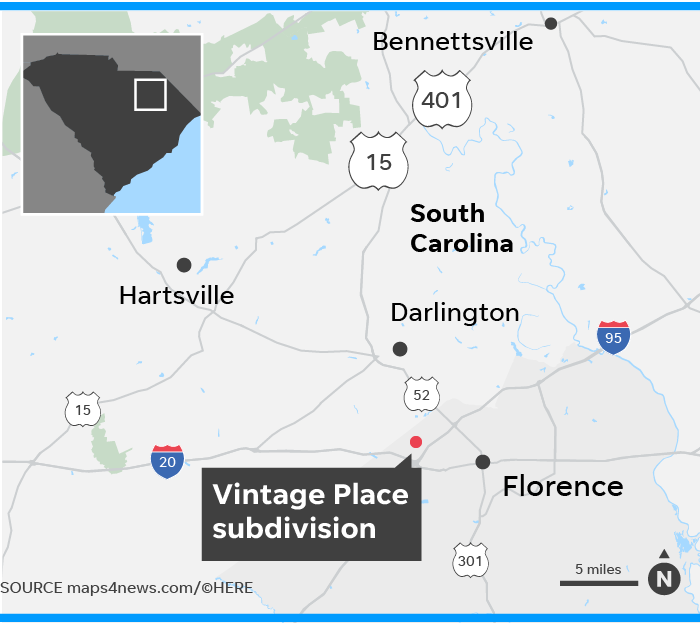
Local media reports said the shooting may have escalated from a domestic violence situation Wednesday night. Officers responded to an active shooting in Vintage Place, an upscale residential subdivision, Florence County Emergency Management tweeted.

A suspect was in custody but no further details were immediately available.

Florence County Coroner Keith von Lutcken said the dead officer was a member of the city police department. Deputy Chief Glenn Kirby said three Florence County sheriff’s deputies and two city officers were shot.

“This is simply devastating news from Florence. The selfless acts of bravery from the men and women in law enforcement is real, just like the power of prayer is real,” South Carolina Gov. Henry McMaster tweeted.

“Prayers with injured officers in Florence and their families,” South Carolina Sen. Tim Scott tweeted. 

John Wukela, a spokesman for the city of Florence, says city police, working with the sheriff’s office, were responding to an incident in the area when they came under fire. He did not have specific information on the numbers of officers involved but said some were seriously wounded.

Florence, a city in South Carolina’s northeastern corner home to roughly 37,000, sits at the convergence of Interstates 95 and 20. It’s the largest city in the region known as the Pee Dee, an area recently affected by heavy flooding in the wake of Hurricane Florence.

Contributing: Associated Press

Read or Share this story: https://ift.tt/2xWe0m3

Read More

from Viral Eyes https://ift.tt/2zPnvoy
via IFTTT

Christine Blasey Ford’s changing Kavanaugh assault story leaves her short on credibility

news image

Margot Cleveland, Opinion contributor
Published 4:00 a.m. ET Oct. 3, 2018 | Updated 12:35 p.m. ET Oct. 3, 2018

Put aside Christine Blasey Ford’s emotional performance. Her testimony revealed her as a witness whose memories change at her convenience.

When Christine Blasey Ford testified last week before the Judiciary Committee, America witnessed a haunted woman recounting a devastating trauma. But putting aside Ford’s emotional performance and focusing instead on the professor’s testimony reveals numerous inconsistencies in her narrative that Supreme Court nominee Brett Kavanaugh sexually assaulted her.

As a sex-crimes prosecutor, Republican questioner Rachel Mitchell is well-positioned to “know it when she sees it.” But rather than see Ford as a victim of sexual abuse by Kavanaugh, Mitchell saw her as a witness lacking in credibility. And this conclusion comes from an expert who knows that there are many reasons victims delay reporting sexual abuse. Mitchell also recognized that victims may legitimately not remember certain details related to an attack. 

But the problem for Ford is not that she doesn’t remember everything: It is that everything she remembers changes at her convenience. 

First, Ford’s testimony that the assault occurred in the summer of 1982, when just 15, conflicted with both her therapist’s notes and the text message Ford sent to the Washington Post. According to reporter Emma Brown, Ford claimed she had been assaulted in the mid-1980s; and the therapist’s notes stated Ford had been the victim of an attempted rape in her late teens. But by that time, Kavanaugh was attending Yale, so Ford’s recasting of the attack to the summer of 1982 is suspect. 

Ford’s story changed in key ways

Ford’s retelling of the alleged sexual assault also included several conflicting accounts of the number of individuals at the gathering. The therapist’s notes stated that four boys had attempted to rape Ford. (Ford claims her therapist confused the total number of boys at the party with the number of boys who had attacked her.) 

Later, in her July letter to Sen. Dianne Feinstein, Ford again placed the number of individuals at the party at five, stating the gathering included her and four other individuals. But Ford then identified the four by name, and that group included three boys and one girl. And finally, during her Senate testimony, Ford unequivocally stated that “there were four boys I remember specifically being there,” in addition to her friend Leland Keyser.

Another significant change in the scenario came when Ford testified about the location of the party. She had originally told the Washington Post that the attack took place at a house not far from the country club. Yet, when Mitchell revealed a map of the relevant locations and reminded Ford that she had described the attack as having occurred near the country club, Ford backtracked: “I would describe [the house] as it’s somewhere between my house and the country club in that vicinity that’s shown in your picture.”  Ford added that the country club was a 20-minute drive from her home. 

More: Don’t count on FBI to clear up the Kavanaugh-Ford mess. Its record is flawed.

3 big questions hanging after Christine Blasey Ford’s testimony on Brett Kavanaugh

How could both Kavanaugh and Ford seem to tell the truth? Trauma, alcohol and time.

Finally, Ford altered her description of the interior layout of the home and the details of the party and her escape.  A “short” stairwell turned into a “narrow” one. The gathering moved from a small family room where the kids drank beer (and which Ford distinguished from the living room through which she fled the house) when she spoke to the Washington Post, to a home described in her actual testimony as having a “small living room/family room-type area.” And in an obvious tell to the change, Ford suggested that she could draw a floor plan of the house.

These four points are significant. First, because Ford had waited 30-plus years to report the purported attack, a therapist’s notes from Ford’s sessions with her husband countered claims that Ford had invented the assault to derail Kavanaugh’s confirmation. But the notes did not name Ford’s attacker. And the timing of the assault summarized by her therapist, whom Ford saw individually the following year, conflicted with Ford’s current claims against Kavanaugh.

The final three contradictions are even more significant because in each circumstance Ford altered her story only after Kavanaugh and Senate investigators had obtained evidence to disprove her original tale. For instance, investigators had obtained statements from Kavanaugh and the two men and one female lifelong friend of Ford’s, and they all denied any recollection of the gathering. 

These contradictions mean Ford’s not credible

Investigators also spoke with former classmates of Kavanaugh, including two men who showed staffers the “party houses” near the country club during the relevant time period. And the detailed description of the home interior Ford originally provided allowed investigators to compare her story to the layout of the homes of the individuals Ford identified. But then Ford changed her description of the house’s floor plan. 

Since media leaks of Ford’s charges first broke, Kavanaugh and his supporters have stressed the impossibility of proving the negative: Kavanaugh could not prove he did not attack Ford. But Kavanaugh could prove that Ford’s story could not possibly have happened by showing that none of the individuals at the supposed party lived in a house near the country club, and that none of their houses matched that described by Ford.  Kavanaugh and investigators were poised to do so when Ford changed her story.

Open-minded Americans of all stripes should see that — emotions aside — Ford’s testimony is completely devoid of credibility: so much so, that Mitchell told the Senate this week that Ford’s allegations do not even meet the preponderance of evidence standard. That standard, which governs in civil litigation, asks whether it is more likely than not that an event occurred. 

Yes, victims must be believed. But Ford is not a victim — at least not of Kavanaugh.

Margot Cleveland is a lawyer and an adjunct instructor at the University of Notre Dame. Follow her on Twitter: @ProfMJCleveland


Read or Share this story: https://ift.tt/2OzfAny

Read More

from Viral Eyes https://ift.tt/2y7XkHy
via IFTTT

5 officers shot in South Carolina, police say suspect is in custody

news image

Five officers were shot Wednesday afternoon in Florence, South Carolina, and a suspect is in custody, officials said.

The incident involved three Florence County Sheriff’s office deputies and two city officers, Chief Deputy Glen Kirby told local CBS affiliate WBTW.

The officers’ conditions haven’t been confirmed, but City of Florence spokesman John Wukela told the Associated Press that some of them are “seriously” injured.

Emergency officials warned locals to stay away from the scene of the shooting, around Vintage Place off of Hoffmeyer Road.

South Carolina Gov. Henry McMaster weighed in on the news, tweeting that the incident was “simply devastating.”

“The selfless acts of bravery from the men and women in law enforcement is real, just like the power of prayer is real,” he said.

This is a developing story. Check back for updates.

Read More

from Viral Eyes https://ift.tt/2IBJp1f
via IFTTT

Design a site like this with WordPress.com
Get started