‘Vice’ trailer makes Dick Cheney’s assault on America look glamorous: Watch

news image

If there’s a headline moment you remember from Dick Cheney’s vice presidency, it’s probably represented in some form, somewhere in this trailer.

Vice takes what looks like a heavily stylized tour through the life of Cheney, as portrayed by a moody and growling Christian Bale. He’s surrounded by a cast that includes Sam Rockwell as George W. Bush and Steve Carell as Donald Rumsfeld. 

This snappy trailer has a strong Goodfellas vibe. But where the Martin Scorsese classic tempers its glamorous look at a gangster’s life with the legal reality of criminal actions having consequences, Cheney got away with what he did. Sobering thought, right?

Feels like the perfect story to tell in a Trump-obsessed world. Vice, from writer and director Adam McKay, hits theaters on Christmas, Dec. 25.

Read More

from Viral Eyes https://ift.tt/2NljStZ
via IFTTT

Malaysia: Ex-PM Najib’s wife Rosmah arrested by anti-graft agency

news image

The wife of former Malaysian Prime Minister Najib Razak, Rosmah Mansor, has been arrested by the country’s anti-graft agency over a multibillion-dollar scandal that helped bring down the government.

“Rosmah has been arrested,” her lawyer K. Kumaraendran told AFP News Agency after she was questioned for hours at the Malaysian Anti-Corruption Commission (MACC) on Wednesday.

Investigations into the alleged looting of state fund 1MDB by an audacious international fraud ring have already seen her husband hit with more than two dozen charges including corruption and money laundering.

Malaysia’s Anwar Ibrahim: ‘Najib was responsible’ | UpFront

He is out on bail following his spectacular fall from power in May elections, at the hands of a reformist alliance headed by Mahathir Mohamad.

The MACC in a statement said it arrested Rosmah, 66, in relation to money laundering investigations after getting approval from state prosecutors.

“Following this, Rosmah will face a number of charges,” it said, adding she will be brought to court early on Thursday to be charged.

An MACC official said Rosmah could face up to 15 years in jail if convicted on each charge.

She is expected to spend the night at the MACC headquarters located in the administrative capital Putrajaya outside Kuala Lumpur.

Rosmah, widely reviled in Malaysia due to her profligate spending while her husband was in power, arrived at the MACC headquarters in a two-car convoy late Wednesday morning.

At the same time, her husband was also being questioned by police in a separate location in relation to the scandal.

Najib, 65, has denied any wrongdoing despite revelations that hundreds of millions of dollars ended up in his personal bank accounts.

Najib and Rosmah have been barred from leaving the country and enforcement agencies have relaunched a probe into how the 1MDB funds went missing.

1MDB is also the subject of money-laundering probes in at least six countries, including the United States, Switzerland and Singapore.

Read More

from Viral Eyes https://ift.tt/2O2qeDV
via IFTTT

Patient deaths bring scrutiny to drug and alcohol addiction treatment centers

news image

CLOSE

A young mom died under questionable circumstances at an Arizona detox center. Surveillance video obtained from investigators
under a public records request shows what happened during the woman’s stay.
USA TODAY

During her nearly three days at an Arizona drug detox center, law enforcement reports show, an Ohio mother repeated the same request to multiple staff members: Take me to the hospital.

Madison Cross, 22, had traveled from her home outside Columbus, Ohio last Oct. 7 to check into Serenity Care Center, a state-licensed drug detoxification center in suburban Phoenix. Her family said she wanted to kick her addiction to opioids and other drugs for her 2-year-old daughter.

But once at the center, she showed escalating signs of distress.

She had trouble breathing. Her pulse raced. She was wheezing, and her lungs sounded “crackly,” staff members told investigators.

She appeared lethargic and ill. One technician told investigators her complexion was jaundiced, and her lips were purple. Another said she went from pale to yellow to blue.

Technicians reported her vital signs to nurses, who consulted with medical staff about her care, according to medical records from the Maricopa County Sheriff’s Office obtained by USA TODAY under a public records request. She was ordered several medications.

But she was not sent to the full-service hospital located less than a mile away. Instead, she collapsed in her room at Serenity, and was soon pronounced dead.

The Maricopa County medical examiner concluded Cross’ death was an accident caused by “septic complications of acute bronchopneumonia in the setting of heroin toxicity.”

An attorney representing the young woman’s family called the center’s treatment of Cross “outrageous.”

“This woman was basically begging for them to save her life by sending her to the hospital, and they refused,” attorney John Wrona told USA TODAY. 

He plans to file a lawsuit on behalf of the family.

A spokesman for Serenity says the center provided appropriate care and monitoring for Cross. The center performs regular room checks, vital signs readings and intervenes when required, spokesman George Haj said.

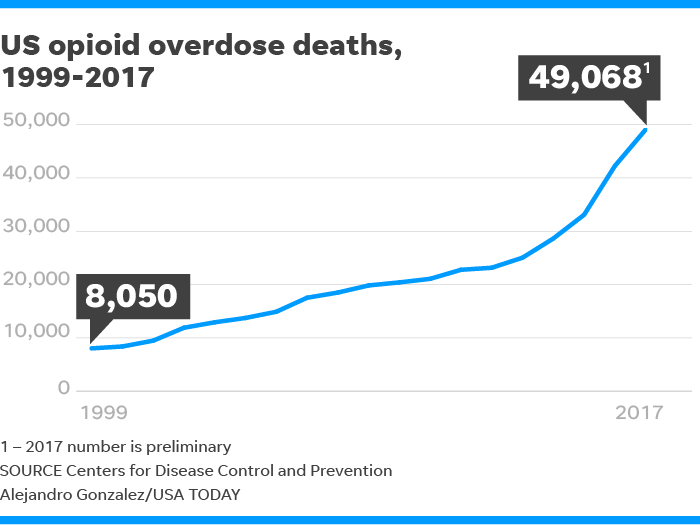
Patients who are undergoing withdrawal and trying to stay clean are particularly vulnerable to medical emergencies. As the opioid epidemic causes demand for addiction treatment to surge, industry veterans say tougher standards, better screening and greater oversight are needed to improve patient safety.

More than 1.4 million people sought treatment for alcohol or drug addiction from inpatient, outpatient and residential treatment programs in 2015, according to the Substance Abuse and Mental Health Services Administration. The federal agency recorded 3,362 deaths.

States separately report death investigations at residential treatment centers. In California alone, state regulators have investigated more than 150 deaths at treatment facilities since 2014. That includes 44 during the fiscal year that ended June 30.

Industry officials say the for-profit centers that have flooded the growing market for addiction treatment are in some cases providing aggressive marketing and substandard care.

“This is a huge issue for the industry,” said Marvin Ventrell, executive director of the National Association of Addiction Treatment Providers. “It is a critical time where we can get this right or we can get this wrong.”

Ventrell was speaking generally. He was not addressing Cross’s death, Serenity or any particular center.

His organization, which represents about 850 facilities in the United States, tightened its policies this year to require members to adhere to an updated code of ethics that prohibits such practices as “patient brokering” – paying recruiters to bring in patients who can generate lucrative insurance payments for services that must be covered under the Affordable Care Act.

The association is also cracking down on websites that deceive consumers about treatment as well as inducements to get people in treatment.

Unscrupulous providers try to sell the service to the prospective patient, industry leaders say, rather than assessing his or her individual medical needs. Many patients, leaders say, might fare better if they received medications such as suboxone or methadone from a doctor rather than checking into a facility and detoxing.

“The key is not to be assessed by a marketer on a website, but by a clinical provider at a reputable center,” Ventrell said.

More: Mom who lost 2 sons in 1 day to opioids: Give kids a life-saving exit strategy

More: Senate advances plan to combat opioid epidemic

More: Naloxone can reverse opioid overdoses, but does the drug belong in elementary schools?

More: The opioid crisis hits home. Mine.

The burgeoning industry has attracted the attention of congressional investigators. The House Energy and Commerce Subcommittee on Oversight and Investigations called industry leaders to a hearing in July on advertising and marketing practices. 

Longtime treatment organizations say they welcome tighter regulations for an industry flooded with newcomers seeking to profit off the addiction crisis.

Mark Mishek, president and CEO of Hazelden Betty Ford Foundation, told lawmakers that the industry is underregulated and lacks consistent quality standards.

“Our industry has seen the rise of unprofessional, unethical and sometimes illegal practices such as deceptive marketing and patient brokering—not to mention excessive consumer billing and insurance fraud,” Mishek testified.

“In too many cases, people who need help are instead being harmed.”

More people need addiction treatment than there are beds or outpatient facilities available. A federal Substance Abuse and Mental Health Services Administration report estimated about one in 10 people who needed substance-abuse treatment in 2016 received it. 

Advocates say for-profit treatment centers provide Americans much-needed access to care. They also say it’s inaccurate to say bad business practices have led to poor care at for-profit centers.

Mark Covall is CEO of the National Association of Behavioral Healthcare, an industry organization that represents about 1,000 nonprofit and for-profit members that provide inpatient, outpatient and residential treatment for mental health and substance abuse. 

Covall said association members adhere to state licensing requirements and often are scrutinized by third-party accrediting organizations such as the Joint Commission and the Commission on Accreditation of Rehabilitation Facilities.

“For-profit or nonprofit is a tax status,” Covall said. “That doesn’t necessarily give any indication of how well or not well a provider is doing.”

‘A lot of the problems we see come from the business model’

When Shaun Reyna contacted a Murrieta, California, treatment center in 2013, he was told he would receive a medical detoxification, an attorney for the family said in a lawsuit.

Reyna, battling alcohol and benzodiazepene addiction, was desperate for help, attorney Jeremiah Lowe says.  

“I feel like I can’t hold on any longer,” Reyna said in a recorded conversation with a company employee.

“I get it, brother. I get it,” the employee responded. “We’re reaching crisis mode … you need to get into a safe environment.”

He took a train from his Atwater, California, home to A Better Tomorrow, the treatment center. He was admitted, and left unattended in his room. He slashed his arm, chest and neck with a razor and bled to death. 

Reyna’s family sued American Addiction Centers Inc., the publicly traded company that owned A Better Tomorrow. In February, a jury awarded the family $7 million in damages.

American Addiction Centers denies it is responsible for Reyna’s death. It has appealed the judgment.

The company closed the Murrieta facility in 2017 as part of a consolidation. 

Cody Arbuckle died at a Las Vegas addiction treatment facility owned by AAC last July. A coroner listed the cause as toxicity from loperamide, an ingredient in the anti-diarrhea drug Imodium A-D.

His mother has filed a lawsuit against AAC in the Clark County District Court. Kathryn Deem, Arbuckle’s mother, is represented by Jeremiah Lowe’s San Diego law firm, Gomez Trial Attorneys.

According to Deem’s attorneys, staff at the Solutions Recovery house reported that Arbuckle was under the influence of drugs. But rather than transporting him to a hospital, they say in a lawsuit, they sent him to a “non-medical residential detoxification house” in Las Vegas. 

Arbuckle was supposed to be under 24-hour monitoring, the lawyers say in the lawsuit, but he was not checked over 14 hours overnight. He was found dead the following morning. 

The lawyers say in the lawsuit that AAC kept Arbuckle “in their non-medical program for business reasons, because they did not want to let go of their paying client.”

He became the seventh patient who died shortly after entering an AAC facility, the attorneys say in the lawsuit. 

Attorneys for AAC filed a motion to dismiss that lawsuit and compel arbitration, and the court has scheduled a hearing for Oct. 30. Arbuckle, like other patients, signed an arbitration agreement when he entered detox.

Attorneys for Arbuckle’s mother say they will argue that the agreement is not enforceable, in part, because patients entering detox are vulnerable.

AAC representatives would not respond to USA TODAY’s questions about the Arbuckle and Reyna cases, citing federal patient confidentiality laws.

Company officials said AAC facilities are accredited by the Joint Commission or the Commission on Accreditation of Rehabilitation Facilities and meet or exceed the licensing requirements of the states in which they’re located.

Tom Doub, AAC’s chief clinical officer and chief compliance officer, said in a statement that AAC seeks “to set a standard in reporting quality outcomes.”

The company paid for a study by Centerstone Research Institute that surveyed former AAC patients. Of those former patients, 63 percent maintained abstinence one year after treatment, a higher mark than national benchmarks, according to Doub.

“As we prepare for the next phase of research, we are using this data to improve our services as part of our ongoing commitment to clinical excellence,” Doub said. 

Lowe says the Reyna and Arbuckle cases represent a larger phenomenon in the industry. 

“A lot of the problems we see come from the business model that allows for big profiteers to come in and make a whole bunch of money off the most vulnerable population,” he said.

‘Large number of deaths at drug rehab facilities’

Video footage taken in Cross’s small detox room during the early morning hours of Oct. 10, 2017, shows her struggling.

She attempts to open a restroom door, but seems confused. Legs wobbling, she stumbles away from her bed and falls to her knees. She grabs a shelf and holds on for several seconds. Her right arm dangles to her side. She collapses to the the floor and lies still.

Six minutes and 25 seconds pass before a Serenity employee enters the room. The technician takes her pulse – there is none, medical and sheriff’s reports would show – rolls her on her back and begins chest compressions.

Paramedics arrive minutes later and take her to Banner Del E. Webb Hospital, blocks away on the same street.

Efforts to revive her are unsuccessful. She would be pronounced dead at the hospital.

Joshua Michael Kennedy, the technician who discovered Cross’s body, was interviewed by sheriff’s investigators that morning. Serenity’s attorneys listened to the interview over the phone.

Kennedy said Cross asked to be sent to the hospital because she didn’t think she was getting the medication she needed. She worried she might have contracted strep throat from her daughter, investigators wrote.

Kennedy took her vital signs at 3 a.m. He noted an elevated pulse rate and less-than-ideal blood pressure, investigators wrote. He reported this to nurses at Serenity, but he “felt as if their response to him was as if he were being a nuisance,” the investigators said.

Wrona, the family’s attorney, argues that Serenity’s nurses failed to recognize the seriousness of Cross’s condition soon enough. He said the problem was compounded by a policy that limits communication from family members during detox.

“There is a difference between someone who is going through a garden-variety detox and one who has a life-threatening medical condition,” Wrona told USA TODAY. “If they had spoken to her family, they would have been able to advocate for her in some way.”

Haj, the Serenity spokesman, said privacy laws prohibit the center from discussing the details of Cross’s case.

“Our policy is that medical personnel constantly monitor a patient’s condition … including regular in-person monitoring of vital signs and in-person room checks,” he said.

Staff members “do not rely solely on the video feed,” he said.

“Patients undergoing withdrawal frequently request transfers to hospitals in the hopes of relieving anxiety or in the hopes of obtaining drugs,” Haj said. “If all requests are satisfied, a patient’s substance use disorder treatment can be severely hampered. Patients are monitored to see if medical intervention is required.”

The state of Arizona cited Serenity Care Center for a deficiency in how it screened a patient arriving at detoxification on the night of October 7.

The Arizona Department of Health Services, the state agency that licenses and regulates detox facilities, did not name the patient, but the time of intake and description matched details of Cross’s arrival and condition.

According to Arizona’s notice of deficiency, Serenity’s policies require a registered nurse to assess a new patient’s medical condition and history. Two Serenity employees said that a licensed practical nurse, not a registered nurse, conducted the screen and assessment, according to state health department records.

Serenity was not fined by the state. The company submitted a plan of correction in May that detailed how the facility would address intake screening. 

‘He had been clean’

Fernin Eaton says his son had struggled with addiction on and off since he was a teenager. But he was hopeful when Nathan entered the Center Point residential treatment home in San Rafael, California, in 2013.

“He had been clean,” Eaton said. “He had not been using. It was a huge success.”

While at the home, Nathan Eaton complained of a toothache. He left the home to go to a dentist’s appointment, but he didn’t make it there. He met his girlfriend instead and took two methadone pills, according to Center Point staff reports obtained by the family. He didn’t feel better, so he took three more. 

Fellow residents at Center Point recognized that he was high and urged him to notify the residential facility’s managers.

Rather than sending him to a drug-detoxification center or a hospital, staff chose to keep him at Center Point. His body was discovered in his room the next morning, according to the Center Point staff reports .

Fernin Eaton received a call from a Center Point representative informing him that his son had died from a drug overdose.

Eaton thought his son had merely relapsed.

Three years later, he learned the details from the father of the Center Point resident who discovered Nathan Eaton’s body.

Paul Schraps, who runs the nonprofit Parent Teen Bridges to help families coping with addiction, requested information about Nathan Eaton’s death, the autopsy and the facility’s licensing. He shared it with Fernin Eaton.

Eaton filed a wrongful death lawsuit. Center Point Inc. paid $245,000 to settle the case. It did not admit liability.

Schraps has since probed several other deaths at addiction-treatment centers. He’s convinced it’s a national problem. 

Schraps said overloaded medical examiners don’t have the resources to adequately investigate deaths at addiction treatment centers, and state regulators often fail to conduct comprehensive inspections and investigations.

“We all know there’s an opioid epidemic,” Schraps said. “What most people don’t know, there are a large number of deaths at drug rehab facilities.”

Ventrell, of the addiction treatment industry group, says treating a person with substance abuse disorder is fraught with risk. 

“This disease is so deadly,” Ventrell said. “There are many good centers that follow good protocols and have had patients die in their care.”

Tips for choosing an addiction treatment center

• Avoid centers that use high-pressure sales tactics.

• Be careful when searching online. Do not decide solely from online directories, generic websites or offers of free treatment placement through a toll-free number. 

• Avoid centers that offer incentives such as free airfare.

• Be wary of facilities that don’t contract with major insurance companies. They may bill excessively as out-of-network providers.

• Ask a doctor or other medical provider for a recommendation.

Source: National Association of Addiction Treatment Providers, USA TODAY research


Read or Share this story: https://ift.tt/2NjMbZK

Read More

from Viral Eyes https://ift.tt/2NljOdJ
via IFTTT

Amazon CEO Jeff Bezos supplants Bill Gates atop Forbes list of 400 richest Americans

news image

CLOSE

Jeff Bezos’s Net Worth Soared to New Heights.
Time

For 24 years, Microsoft co-founder Bill Gates held the top spot on Forbes’ ranking of the richest Americans. But no longer.

Amazon.com CEO and founder Jeff Bezos has supplanted Gates on the magazine’s annual list of the 400 richest Americans. His net worth is $160 billion, up from $81.5 billion a year ago.

Gates is now No. 2 with Berkshire Hathaway CEO Warren Buffett, Facebook co-founder and CEO Mark Zuckerberg and Oracle co-founder Larry Ellison holding onto the next three spots, the same positions as in last year’s list, the magazine reported Wednesday.

President Donald Trump dropped 11 spots on the list to No. 259, but his net worth remained about the same at $3.1 billion.

He is tied with 11 others at that spot with Third Point hedge fund founder Daniel Loeb and Mary Alice Dorrance Malone, the largest shareholder in the Campbell Soup Co., among others.

In an accompanying story, Forbes notes Trump’s not getting any richer as president. The magazine found that Trump Organization net operating income dropped 27% between 2014, the year before Trump announced his run for president, and 2017, his first year in the White House.

It makes sense Bezos would assume the top spot, as three months ago he was named the richest person in modern history by the Bloomberg Billionaires Index.

Bezos is the largest shareholder in Amazon, which has seen its shares (AMZN) rise 60 percent so far this year to $1,971.31 per share. His stake is valued at $158.1 billion, according to S&P Global Market Intelligence.

Collectively, the 400 richest Americans net worth rose to $2.9 trillion, up from up from $2.7 trillion in 2017. Minimum net worth to make the list was $2.1 billion, up from $2 billion last year.

“We’re seeing more billionaires than ever before, thanks in part to the strong stock market and continuing tech boom,” Luisa Kroll and Kerry Dolan, assistant managing editors of wealth at Forbes Media, said in a statement. “For the first time, more than a third of U.S. billionaires were too poor to make this elite list of the nation’s 400 richest.”

The average of those on the list was $7.2 billion, a new record and an increase from $6.7 billion a year ago.

For the first time, Forbes ranked those on the list for their philanthropic efforts. Tesla CEO Elon Musk, No. 24 on the list ($19.6 billion) earned the No. 1 philanthropy score.

Slightly more women (57) made the list, with Alice Walton, the daughter of Walmart founder Sam Walton ($44.9 billion) being the highest-ranked at No. 12.

Follow USA TODAY reporter Mike Snider on Twitter: @MikeSnider.

Read or Share this story: https://ift.tt/2QmgxwS

Read More

from Viral Eyes https://ift.tt/2NYKB4V
via IFTTT

A $150 billion investment chief lays out his 4-part recession checklist — and warns we’re approaching dangerous territory

news image

As calls for an US recession mount, it’s an easy time to pile on with vague platitudes about an impending economic meltdown.

Coming up with a detailed, multi-part recession scenario is another story entirely.

Brad McMillan, the chief investment officer of the $150 billion Commonwealth Financial Network, has done just that.

He’s compiled a four-part checklist of indicators he watches closely for signs of an economic reckoning. And while none of them are flashing a warning signal at this very moment, they’re edging ever-closer to troublesome territory.

The checklist ultimately provides a handy guide for investors to keep a close eye on the types of economic regressions that can trigger recessions, as well as the vicious market sell-offs that have historically accompanied them.

Here it is, broken down in detail:

1) Job growth drops below 2 million a year

For reference, the trailing 12-month sum of jobs added comes out to 2.2 million. So McMillan’s threshold is somewhat near.

With that said, keep in mind that September 2017 — the last month included in the total — saw jobs contract by 33,000. Meanwhile, the September 2018 number is expected to mark an expansion of 184,000, so that trailing annual figure is about to look at lot stronger. Still, it’s arguably the most important indicator to watch.

“If job growth were to pull back substantially, that would shake things,” McMillan told Business Insider in an interview. “It reflects business confidence. If companies either aren’t hiring or can’t hire, that radically affects their ability to grow and expand. That’s the one I would watch the closest.”

Business Insider / Joe Ciolli, data from Bloomberg

2) Consumer confidence drops more than 20 points year-over-year

While McMillan keeps tabs on the overall level of consumer confidence — as measured by the Conference Board survey — he’s far more interested in the directional trend.

He says that if the measure drops more than 20 points on a year-over-year basis, that’s when a serious recessionary red flag would be raised. Considering that consumer confidence has been rising, and tends to fluctuate in small, several-point increments, this one would seem to have a ways to go.

For context, it rose five points to 138.4 in September, its third straight increase.

3) The ISM non-manufacturing index falls below the 50 threshold

At 59.8, the ISM non-manufacturing index is nearly 10 points from McMillan’s holy threshold. The gauge hasn’t slipped below 50 since August 2016, and was most recently below 50 for consecutive months in early 2016.

Still, it slipped by 1.5 points in September, showing signs of trending in a dangerous direction.

4) The 10-year/3-month yield curve inverts

The 10-year/2-year yield curve is the one most frequently cited by experts and the financial press alike. But McMillan favors the spread between 10-year Treasurys and their 3-month counterparts.

McMillan says this warning sign flashes red when inversion occurs — or when the 3-month yields more than the 10-year, signaling that near-term nervousness is at a fever pitch.

As you can see in the chart below, this relationship hasn’t inverted quite yet, but it’s the closest since the financial crisis a decade ago.

“From a financial perspective, the yield curve is probably the big one,” said McMillan. “Everybody’s watching it.”

He continued: “If it were to suddenly invert, that would rattle Wall Street. If job growth suddenly fell off, that would rattle Main Street. If, for whatever reason, they both dropped off, everybody’s going to be rattled, and that can’t be good.”

St. Louis Fed

With the recession playbook established, one question remains: What about financial assets?

McMillan warns that a sharp sell-off will likely result once a recession strikes. After all, he says, everything from profit margins to buybacks to mergers and acquisitions have peaked recently.

McMillan’s specific forecast is for a recession to strike in late 2019. So while we could have another six months or so of blissful conditions, things could quickly turn south after that. It’s a similar forecast to the one recently laid out by billionaire investor Ray Dalio in an interview with Business Insider.

“I don’t expect a severe recession, but we didn’t have a severe one in 2000 either,” said McMillan. “It was the financial markets that have the most correcting to do, not the real economy. And I think that’s a very relevant comparison.”

Read More

from Viral Eyes https://ift.tt/2OENpnv
via IFTTT

Christian Bale and Sam Rockwell chart Dick Cheney’s rise under George W. Bush in Vice trailer

news image

Christian Bale, Amy Adams, and Sam Rockwell take aim at one of the most controversial government figures in recent American history in the first trailer for Adam McKay’s upcoming biopic Vice.

Annapurna unveiled the first full-length trailer for the film Wednesday, giving audiences a taste of the political dramedy starring Bale — sporting heavy makeup — as then-Vice President Dick Cheney.

“I want you to be my V.P. I want you. You’re my vice,” Rockwell — in character as Bush — tells Bale’s Cheney while eating fried chicken in a scene from the preview. “Well, George, I’m a CEO of a large company. And I have been Secretary of Defense. And I’ve been White House chief of staff. The vice presidency is a mostly symbolic job. However, if we came to a different understanding, I can handle the more mundane jobs: overseeing bureaucracy, military, energy, and foreign policy.” With little pause, Rockwell responds: “Yeah, right. I like that.”

Thus, Vice chronicles Cheney’s early political career as well as his time as Bush’s all-powerful right-hand man, including his role in laying the foundation for the Iraq War and other headline-making moments, like the accidental shooting of his hunting partner in 2006.

The trailer also offers glimpses of Adams’ portrayal of Cheney’s wife, Lynne; Sam Rockwell as President George W. Bush; and Steve Carell as Secretary of Defense Donald Rumsfeld.

The project — produced in part by Will Ferrell and Best Picture-winning Moonlight makers Brad Pitt, Dede Gardner, and Jeremy Kleiner — marks McKay’s first directorial effort since 2015’s The Big Short. Though Vice skipped the fall festival circuit, it will qualify as a late-breaking contender in the awards race ahead thanks to its previously announced Dec. 25 release date.

Watch the trailer above.

Read More

from Viral Eyes https://ift.tt/2P8Trtw
via IFTTT

Playing ‘Super Mario Party’ alone makes me feel sad

news image

Image: mashable / nintendo

Super Mario Party is an OK game. The concept is fine. The minigames are decent. The whole thing is so mediocre.

Super Mario Party, the 11th Mario Party game for home consoles and the first on Nintendo Switch, takes the 20-year-old series and does almost nothing new with it. When playing it with a friend, it was fine. When playing it by myself, it was aggressively boring.

Like all of its predecessors, Super Mario Party is basically a digital board game starring characters from the Super Mario universe, where players roll dice to move around a board and collect coins to find and buy randomly located stars — the player with the most stars wins. 

Hooray!

Hooray!

Image: mashable / nintendo

At the end of each turn, players compete in a random minigame (of which there are 80) to earn more coins. These minigames are definitely the most exciting part of the game, but they aren’t particularly exciting.

While the Switch presents some potentially interesting minigame mechanics with its HD rumble and motion controls, Super Mario Party feels like it could be a Wii game with its basic minigames that barely utilize what the Switch has to offer.

Some of the minigames are fun, sure, but many of them are slow and amount to nothing more than pressing a single button repeatedly. 

This minigame involves finding a square of fruit that's the same as the fruit on the left. It's not very riveting.

This minigame involves finding a square of fruit that’s the same as the fruit on the left. It’s not very riveting.

Image: mashable / nintendo

Super Mario Party also forces players to use a single Joy-Con controller, which is not a particularly comfortable way to play any game, except for maybe 1-2-Switch, which honestly is quite a bit more fun to play than Super Mario Party.

But Super Mario Party isn’t all about the minigames. The delivery system for them, the board game part, is cool for a couple turns. Players need to be lucky with their dice rolls and placement to win, and that’s roughly it. It pretty much all comes down to luck.

As exciting as a regular board game.

As exciting as a regular board game.

Image: mashable / nintendo

The maps are attractive and they have some unique mechanics that shake things up, but they tend to be more frustrating than anything. The unique mechanics are mostly unavoidable events that either force characters to move spaces or lose coins.

The only thing that made Super Mario Party enjoyable was playing with someone I like. But even then, neither of us wanted to play a second round.

This barrel rolling minigame consisted of just tilting the controller forward and navigating very, very slowly.

This barrel rolling minigame consisted of just tilting the controller forward and navigating very, very slowly.

Image: mashable / nintendo

Playing by myself felt like a chore, because almost no part of it is engrossing enough to stand on its own. The reliance on luck for success was annoying and made me lose interest, because trying didn’t really matter.

Super Mario Party is, if anything, a disappointment.

Https%3a%2f%2fblueprint api production.s3.amazonaws.com%2fuploads%2fvideo uploaders%2fdistribution thumb%2fimage%2f86332%2f4645f748 16bf 490d 8915 e8c8828a1a10

Read More

from Viral Eyes https://ift.tt/2OBNyI0
via IFTTT

Jeff Flake says Trump mocking Christine Blasey Ford is ‘kind of appalling’

news image

CLOSE

President Trump mocked Dr. Christine Blasey Ford’s testimony against Supreme Court nominee Brett Ka
USA TODAY

Sen. Jeff Flake called out President Donald Trump for mocking Christine Blasey Ford, saying that behavior was “kind of appalling.”

Trump, during a rally Tuesday night, criticized Ford, who testified last week about her allegation that Supreme Court nominee Brett Kavanaugh sexually assaulted her when they were both teenagers.

At one point during the rally, Trump mocked Ford’s testimony.

“I had one beer, that’s all I remember,” Trump said, pretending to be Ford.

“I don’t know – over and over,” he said, framing Ford’s testimony. “And a man’s life is in tatters.”

Flake, speaking on the “Today” show, said discussing sexual assault allegations at a rally was “just not right.”

“I wish he hadn’t done it and I just say it’s kind of appalling,” the Arizona Republican said said.

Last week, Flake voted to advance Kavanaugh’s nomination, but called for the reopening of the investigation into the judge’s background. The senator, who is retiring after this year, said the judge’s nomination would be “over” if the FBI found that Kavanaugh lied to the Senate Judiciary Committee. 

More: Kavanaugh compromise: Sens. Jeff Flake, Chris Coons channel their mentors, John McCain, Joe Biden

More: No, Jeff Flake isn’t filing charges against women who confronted him on sexual assault

Autoplay

Show Thumbnails

Show Captions


Read or Share this story: https://ift.tt/2y3Wlcz

Read More

from Viral Eyes https://ift.tt/2P8ToOm
via IFTTT

A Toys R Us comeback? New name, same mascot Geoffrey emerge in post-bankruptcy plan

news image

CLOSE

Take a trip back to your younger days with one of the nation’s best-known retail chains.
USA TODAY

Toys R Back?

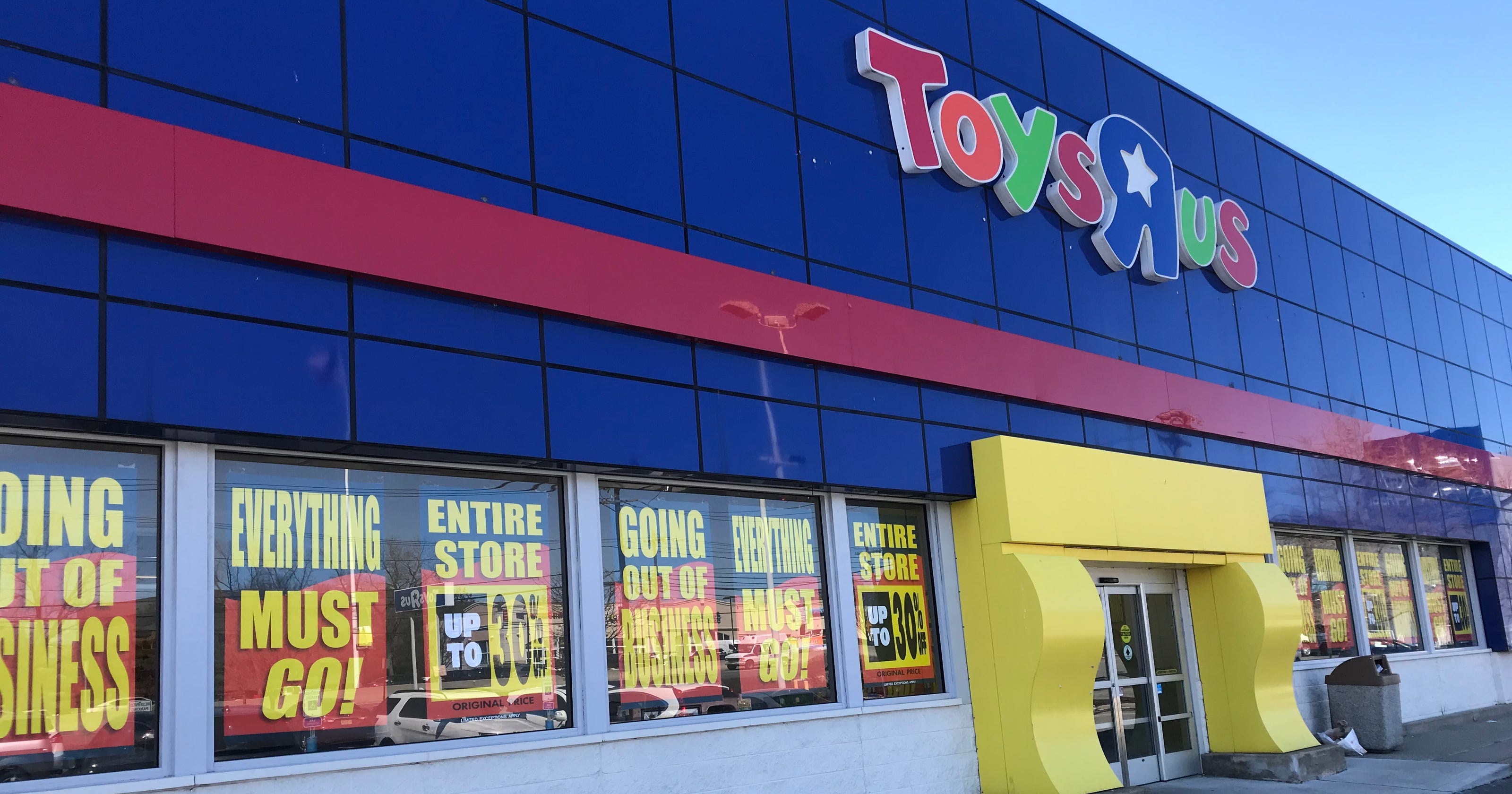
Not quite, but the first signs of how the financial firms who carved up Toys R Us plan to resurrect the iconic brand from the ashes of its bankruptcy and liquidation have started to emerge.

The lenders who own a key piece of the old Toys R Us have revealed that they are keeping the corporate brand names and intellectual properties, including Geoffrey, the brand’s giraffe mascot, and are dipping their toes back in the toy business with a wholesale venture called Geoffrey’s Toy Box. 

That new venture, for the time being, is being operated out of the Toys R Us headquarters building in Wayne, where a small number of former Toys R Us executives and employees continue to report to work.

Played a role in shutdown

Geoffrey, LLC, a subsidiary of Toys R Us that owns the companies intellectual property rights, and controlled by lender groups that provided financing during the bankruptcy and that have been criticized for the role they played in the shutdown, issued a press release late Tuesday saying it is working on a plan that could bring “new and re-imagined Toys R Us and Babies R Us stores” back to the United States.

Other players

The rise and fall of Toys R Us

Geoffrey’s Toy Box also introduced itself to toy manufacturers and sellers Tuesday at the opening of the Dallas toy show, with an exhibit booth. The company describes itself in the show brochure as a “Wholesale toy distributor and intellectual property company whose focus is on popular play patterns across trusted brands that kids and parents love.”

James Zahn, a toy reviewer and publisher of The Rock Father magazine reported Tuesday that a Geoffrey costumed mascot was roaming the aisles of the Dallas toy show wearing a cape with the words “Back From Vacation”, with a sign advertising the Geoffrey Toy Box booth.

Zahn also noted that the Toys R Us Twitter account has recently been cleaned up, and all references to liquidation deleted.

Store partnerships

Trade publication The Toy Book reported Tuesday night that Richard Barry, the chief merchandising officer for the old Toys R Us, said that the new company is exploring “stores within stores” partnerships with large retailers. Barry’s business card now has a Geoffrey’s Toy Box logo.

Toys R Us opted to close all of its stores after lenders backing the bankruptcy financing said they had lost confidence in the company’s reorganization plan. All of the stores closed by the end of June.

The lender group told the bankruptcy court in a document filed Monday that it had cancelled an auction for the brand names and intellectual properties that had been scheduled for Thursday. The group also said that while it had received bids for the properties, it believed that keeping the property rights and launching a branding business and possible retail operation would produce greater financial returns.

The group told the bankruptcy court it envisions “a new, operating Toys “R” Us and Babies “R” Us branding company that maintains existing global license agreements and can invest in and create new, domestic, retail operating businesses under the Toys “R” Us and Babies “R” Us names, as well as expand its international presence and further develop its private brands business.”

Bloomberg News reported Tuesday that the Geoffrey LLC group includes the Solus Alternative Asset Management and Angelo Gordon funds. The brand names and intellectual property rights served as collateral to secure loans backed by the lender group.

SHOPPING: Holiday toy warning for parents: Don’t wait to get these hot items

WATCH: The 2018 TTPM Holiday Toy Showcase in NYC

COMPETITION: Walmart, Amazon, other retailers try to capture toy dollars left behind by Toys R Us

Worker protests

Solus and Angelo Gordon has been criticized by worker groups for refusing to contribute to a fund for laid off Toys R Us employees.  Workers appeared before the New Jersey State Investment Council last week to urge the state to withdraw its $300 million investment with Solus.

Geoffrey LLC owns the rights to more than 20 toy and baby brands Toys R Us sold as part of its private label merchandise, including Imaginarium, Koala Baby, Fastlane and Journey Girls. It could continue supplying those products on a wholesale basis. 

It also owns the rights to the Toys R Us and Babies R Us names in all countries except for Canada, and baby and gift registries operated by the former company.

The Geoffrey LLC plan is subject to final approval by the bankruptcy court.

Autoplay

Show Thumbnails

Show Captions


Read or Share this story: https://ift.tt/2P8Tju2

Read More

from Viral Eyes https://ift.tt/2Owzuje
via IFTTT

GM and Honda are joining forces on self-driving cars, with a $750-million Honda investment making GM Cruise worth $14.6 billion

news image

General Motors announced Wednesday that it has allied with Honda to pursue a shared self-driving future.

Honda will invest $2 billion over 12 years in the collaboration with GM’s Cruise autonomous division, with an additional $750-million equity investment that brings Cruise’s valuation to $14.6 billion.

GM acquired San Francisco-based Cruise in 2016 for an all-in price of $1 billion. A recent joint investment from GM and SoftBank took the unit’s valuation to $11.5 billion.

The GM-Honda partnership will develop what the companies called a “purpose-built autonomous vehicle” for Cruise, intended to provide the carmakers with global scale and possible commercial applications. GM and Honda had previously announced a collaboration on battery development.

“This is the logical next step in General Motors and Honda’s relationship, given our joint work on electric vehicles, and our close integration with Cruise,” GM CEO Mary Barra said in a statement.

“Together, we can provide Cruise with the world’s best design, engineering and manufacturing expertise, and global reach to establish them as the leader in autonomous vehicle technology – while they move to deploy self-driving vehicles at scale.”

Building a Cruise self-driving vehicle with Honda

A Cruise Chevy Bolt.
Cruise

GM and Cruise have focused on a fully-integrated hardware and software solution to the challenge of establishing an autonomous ride-hailing/sharing network that can operate in urban environments.

The deal has led to the rollout of a fully-integrated autonomous electric car — the tech is being built into Chevy Bolt electric vehicles — that is being fleet-tested in San Francisco, Detroit, and Phoenix, with New York City scheduled to follow this year.

Commercialization, according to GM’s president, Dan Ammann, and Cruise’s CEO, Kyle Vogt, will arrive in 2019.

“With the backing of General Motors, SoftBank and now Honda, Cruise is deeply resourced to accomplish our mission to safely deploy autonomous technology across the globe,” Vogt said in a statement.

“The Honda partnership paves the way for massive scale by bringing a beautiful, efficient, and purpose-built vehicle to our network of shared autonomous vehicles.”

The announcement indicates that Cruise, which up to this point was operating exclusively with a fleet of Chevy Bolts, will see it’s technology integrated into platforms designed and engineered by Honda.

This is a not-unfamiliar move in the global auto industry, as automakers look to share costs by working together on mutually beneficial technologies.

Read More

from Viral Eyes https://ift.tt/2xXh4yl
via IFTTT

Design a site like this with WordPress.com
Get started