
“Can I get pregnant if…?”
Read More
from Viral Eyes https://ift.tt/2y8GoRc
via IFTTT
“Can I get pregnant if…?”
Read More
from Viral Eyes https://ift.tt/2y8GoRc
via IFTTT

Suspected cholera cases have almost tripled in Yemen‘s coastal Hodeidah region since the Saudi Arabia-UAE coalition launched a military offensive in June to retake the area, according to a rights group.
Health facilities across the governorate recorded a 170 percent increase in the number of suspected cholera cases, from 497 in June to 1,342 in August, Save the Children, a UK-based NGO, said in a report.
|
WATCH: Yemen losing generation of youth to war |
The group said the spike was in line with national data that also showed a steady increase of suspected cholera cases across Yemen.
Thirty percent of all suspected cases are children under five years old, according to the World Health Organization.
“The situation in Hodeidah has become unbearable because of the conflict. I’m seeing more and more children coming in with suspected cholera,” Mariam Aldogani, Save the Children’s Hodeidah field manager, said.
“I met one mother of two who has acute diarrhoea and she told me her whole family is affected because they don’t have access to clean water anymore.”
The rise in suspected cases in Hodeidah follows a dramatic increase in fighting between the Houthis and forces backed by the Saudi Arabia-UAE coalition since June.
According to the group, a series of air strikes in late July resulted in the damage of a sanitation facility and water station that supplies Hodeidah with most of its water.
Suspected cholera cases almost doubled in the aftermath of the incident, going from 732 in July to 1,342 in August.
In a recent UN survey of more than 2,000 respondents across Yemen, more than half (56 percent) cited water supply damage as the most common form of infrastructure damage. In Hodeidah governorate this jumped to 62 percent of respondents.
“Children in Yemen are experiencing severe hardships that no child should endure, facing multiple threats from bombs and bullets to disease and extreme hunger,” said Tamer Kirolos, Save the Children’s Yemen country director.
“Treating cholera is straightforward, provided children can get the rehydration and antibiotics they need, and hospitals and clinics are adequately equipped. But nearly four years of conflict has led to a near-total collapse of the health system in Yemen.”
Fighting near Hodeidah – the main gateway for imports of relief supplies and commercial goods into the country – has escalated since June 13 after the Saudi-UAE alliance launched a wide-ranging operation to retake the strategic seaport.
The offensive is being carried out by a disparate collective of forces including the National Resistance, a group of fighters loyal to Yemen’s former President Ali Abdullah Saleh, the Tihama Resistance, a group of fighters loyal to Yemen’s President Abd-Rabbu Mansour Hadi, and the Giant Brigades, a military unit backed by the UAE.
Riyadh and Abu Dhabi see Hodeidah port as the main entry point of weapons for the Houthis and have accused their regional rival Iran of sending missiles to the rebels, a charge Tehran has denied.
The war in Yemen, the region’s poorest country, started in 2014 when the Houthis overran much of the country, including the capital, Sanaa.
Hadi’s government was toppled by Houthi rebels in late 2014 after the rebels advanced south from their stronghold of Saada and captured large parts of the north.
The conflict escalated in 2015 when Saudi Arabia and the UAE launched air raids in an attempt to reinstate the internationally recognised government of President Hadi.
With logistical support from the US, the Saudi-UAE alliance has carried out more than 16,000 raids on Houthi-held areas in an attempt to reverse their gains.
These attacks have hit weddings and hospitals as well as water and electricity plants, killing and wounding thousands.
|
WATCH: Inside Story – Can the UN revive talks to end the war in Yemen? |
from Viral Eyes https://ift.tt/2RiHl2u
via IFTTT


SportsPulse: LeBron James made his grand entrance as a member of the Los Angeles Lakers and he explained the reasoning behind his decision.
USA TODAY
Kanye West’s latest fashion foray, into basketball shoes made by Adidas for NBA players, may have hit an early snag.
The current version of Yeezy basketball shoes for NBA players – set to debut this season – would be banned by the league in games “because of its gleaming, reflective material heel, according to industry sources,” ESPN reported Monday.
The problem is with the reflective 3M heel panel that the “NBA would find potentially distracting for both in-arena spectators and television viewers,” according to ESPN.
The league goes through an approval process for on-court shoes, and the Yeezy sneaker has not gone through the approval process. Citing a source, ESPN said the league would not permit players to wear the Yeezy shoe as it’s currently designed.
Alterations to the shoe – the absence of the 3M reflective heel panel – could be approved by the league and worn by players this season.
In a recent Instagram post, West said the shoes were three years in the making with more than 300 updates.
This season, players do not have to wear shoes matching their team’s colors, but shoes still must be approved the league.
According to a story on nicekicks.com, the league approves shoes for the first half of the season in August and again in early December for the second half of the season.
Follow Zillgitt on Twitter @JeffZillgitt
from Viral Eyes https://ift.tt/2y1MuTA
via IFTTT

They may have needed 163 games to do it, but the Los Angeles Dodgers claimed their sixth consecutive National League West division title with a 5-2 victory over the Colorado Rockies.
As a result of Monday’s two tiebreaker games, the NL playoff picture is finally set with the Dodgers hosting the Atlanta Braves in Game 1 of the Division Series on Thursday, while the Rockies travel to Chicago to face the Cubs in a one-game wild-card playoff tomorrow.
The Dodgers finish the regular season 92-71, the Rockies 91-72.
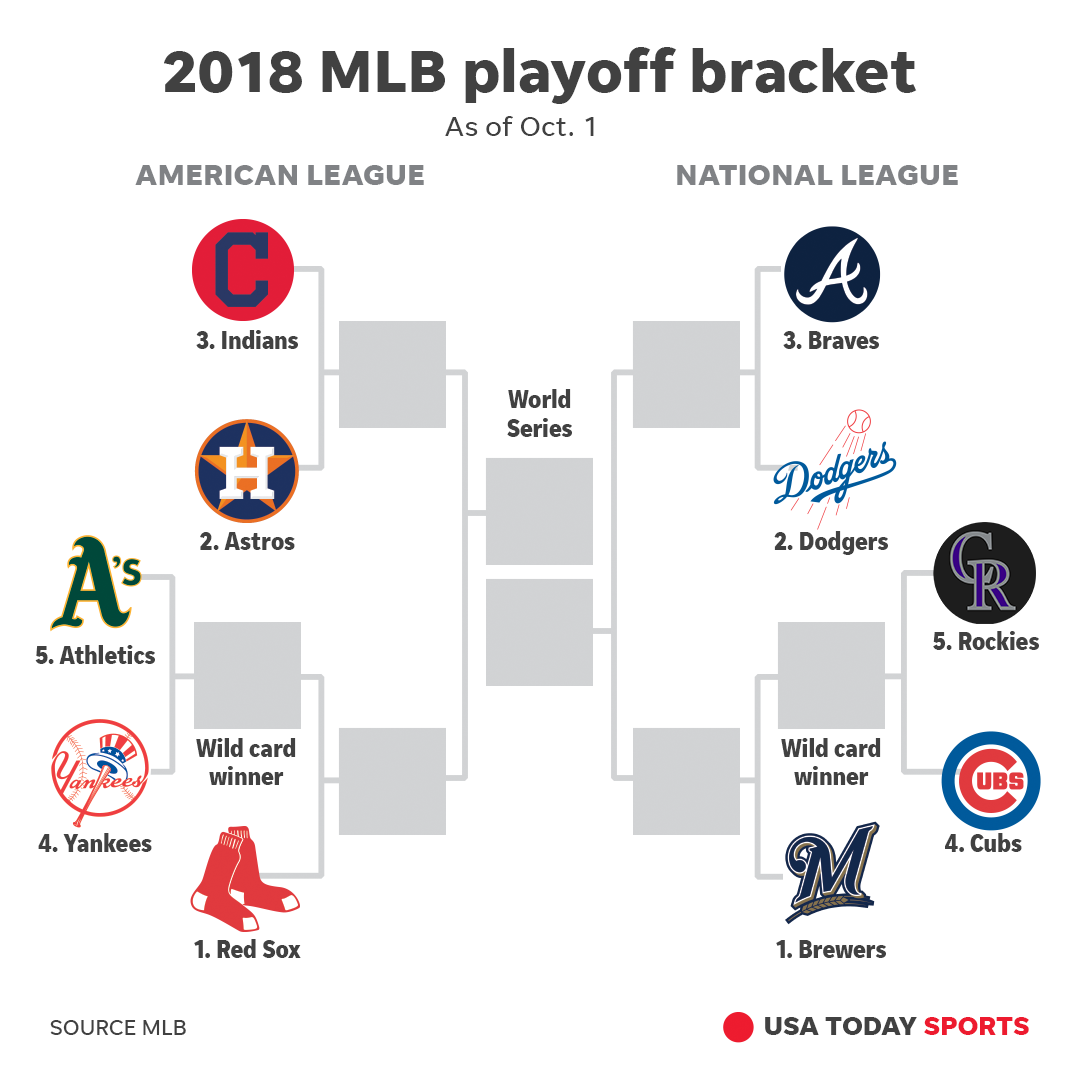
Breaking down the tiebreaker:
The game: Cody Bellinger’s two-run homer off Rockies starter German Marquez broke a scoreless tie in the bottom of the fourth and provided all the offense the Dodgers needed for rookie right-hander Walker Buehler.
Max Muncy followed with a two-run homer of his own an inning later and effectively close the book on Marquez, who struck out nine in 4 ⅔ innings.
Buehler, meanwhile, held the Rockies without a hit for the first 5 ⅓ innings before giving up a clean single to Charlie Blackmon in the top of the sixth. That was the only hit he allowed before leaving to a standing ovation with two outs in the seventh. He walked three and struck out three, throwing 93 pitches.
Buehler even helped his own cause with an RBI single in the top of the seventh.
Nolan Arenado and Trevor Story hit back-to-back home runs off Dodgers closer Kenley Jansen to start the ninth inning, but it was too little too late.
State of the Dodgers: Winning the division title will give the Los Angeles a welcome two-day break at home before the Division Series begins at Dodger Stadium.
Ace Clayton Kershaw (9-5, 2.73) will start Game 1 on full rest. Manager Dave Roberts said he plans to have Hyun-Jin Ryu go in Game 2, with Buehler available to take the mound for Game 3 in Atlanta.
State of the Rockies: Colorado had to lean heavily on its best starters to even get to the point of playing for the division title. In the wild-card game vs. the Cubs, they could start their ace this season, lefty Kyle Freeland (17-7, 2.85 ERA), on three days’ rest. Or they could counter with No. 4 starter Antonio Senzatela (6-6, 4.38) and have the bullpen ready to take over at any sign of trouble.
Although a loss is never easy, the Rockies can take comfort in the fact that they finished the regular season with nine wins in their last 11 games. They’ll face Cubs left-hander Jon Lester in the wild-card game – which should be somewhat encouraging because they have the National League’s highest OPS against lefties (.798).
Man of the moment: Walker Buehler. The Dodgers managed the workload of their prized rookie right-hander throughout the season to give him the opportunity to perform in games of this magnitude. He came into Game 163 with a total of 146 ⅔ innings under his belt.
Although he appears destined to finish third in the NL Rookie of the Year award voting, Buehler has played a huge role in the Dodgers’ success. In 24 appearances (23 starts) he compiled a stellar 2.62 ERA – and he pitched perhaps the game of his life (so far) in the team’s biggest game of the season.
Follow Gardner on Twitter @SteveAGardner
MORE MLB:
from Viral Eyes https://ift.tt/2RgTrJh
via IFTTT

Disney now owns Fox, and Comcast owns Sky.
Meanwhile, a few hundred billion dollars or so later, Google may end up with a piece of Disney.
Wait, what?
In one of the stranger twists to stem from the high stakes media mega mergers of the past year, Google may end up stealing a key client from Comcast in the ultimate ‘the enemy of my media mogul enemy is my friend’ move.
Specifically, Google may be closing in on landing Disney as a client for its video ad serving product, which would displace Comcast’s FreeWheel.
And while this behind the scenes ad tech drama will fall short of rocking the industry like the recent mergers have, it seems that Comcast’s push to drive up the price of Disney’s bid for Fox earlier this year trickled down to Disney’s ad tech decisioning.
The talk inside of Disney is that the company isn’t necessarily going to pick Google to handle its digital video infrastructure because of superior tech. It just may want to stop paying Comcast for this sort of thing.
Nothing official has been announced, but most in the ad industry believe Disney will dump FreeWheel for Google’s DoubleClick. “It’s the worst kept secret in ad tech,” said one insider.
Back in April, Business Insider reported that Disney was considering making a video ad tech switch. Instead of having Comcast’s FreeWheel handle ad serving for everything from ABC’s app to live streams on ESPN.com, the company was mulling whether to go with Google.
That would be a big win for Google, which has for over a decade been trying to get its hooks deeper into the TV business, helping it get one step closer to its $70 billion US ad market.
But sometime over the next few months, the tide seemed to shift back in Comcast’s favor. Some executives at Disney pushed to keep working with Comcast’s FreeWheel, vouching for its technology.
One person familiar with the discussions said there were two camps emerging at Disney: corporate decision makers on one side and ad operations executives, the people who actually use and implement the technology day to day, on the other.
The ad operations officials generally had favorable impressions of FreeWheel. But there were some at the top who were enamored with Google’s reputation as a tech powerhouse, and wanting to be associated with that rep.
Regardless, switching video ad tech products at a company the size of Disney is no small matter, say experts.
“It’s not an easy switch,” said Dave Buonasera, CTO at SpringServe, a upstart video streaming firm. “Keep in mind these are two legacy ad servers. Neither were built for the paradigm we see today.”
“So if this happens, it’s a good bet the ad-ops team won’t be happy,” said Buonasera. “Not to mention both companies are in the business of selling ads vs purely proving a technology platform.”
Sometime last spring, a bake off of sorts was held, according to people familiar with the matter. Both parties put together a detailed proposal for Disney, and Disney’s ad ops team tested the performance of FreeWheel and Google’s DoubleClick.
According to multiple sources, FreeWheel’s technology, and its overall proposal, outperformed Google.
However, another source said that it wasn’t clear cut, and that both companies exhibited different strengths.
Regardless, in June Comcast bid $65 billion for 21st Century Fox — well surpassing Disney’s previous $52 billion offer for Fox.
Soon after, Disney was forced to up its Fox bid to $71.3 billion. Meanwhile, as the summer progressed Fox (which was eventually going to be part of Disney) got into a bidding battle with Comcast for the UK pay TV company Sky.
Needless to say, around this time some executives at Disney became less enthralled with the idea of paying Comcast for anything, let alone a few million to rent its ad tech, according to multiple people familiar with the matter. In fact, the team at Comcast that had been working with Disney during its ad tech bake off stopped hearing from the House of Mouse.
According to multiple sources, word inside Disney was that a decision had been made up high to stop paying Comcast.
“At one point it was, ‘we’re sticking with FreeWheel,” said one Disney insider. “Then it was, full speed ahead with Google.”
Yet others dispute this, noting that Disney will ultimately make a decision based on each companies technical merit, and that politics won’t play a role.
As of now, no decision has been made. To be sure, executives at Disney have been preoccupied with other matters, such as integrating the Fox assets.
But soon, the ad tech drama is sure to heat up.
from Viral Eyes https://ift.tt/2zJqlvd
via IFTTT

Te Adoro, Anton Ansel! Ansel Elgort will never stop saying “Maria.”
The Baby Driver star has been cast as Tony in Steven Spielberg’s remake of West Side Story, producers announced on Monday. Pulitzer Prize-winning writer Tony Kushner adapted the script from the original 1957 Broadway book written by Arthur Laurents, with music by Leonard Bernstein and lyrics from Stephen Sondheim. Spielberg, Kevin McCollum, and Kristie Macosko Krieger will produce.
The beloved musical, the original film adaptation of which won the 1962 Best Picture Oscar, is based on Shakespeare’s Romeo and Juliet transposed to late 1950s New York City. It explores the rivalry between two warring street gangs, the white Jets and the Puerto Rican Sharks, amidst simmering racial tensions. Tony adds fuel to the fire when he falls for Maria, the younger sister of the leader of the Sharks, and the two forge a forbidden bond.
The original film starred Richard Beymer as Tony (Larry Kert originated the role in the 1957 Broadway musical) and featured an all-star cast including Natalie Wood, George Chakiris, Rita Moreno, and Russ Tamblyn. Elgort will tackle some of the show’s most memorable songs, including the beloved ballad “Maria” and romantic duets, “Somewhere,” “One Hand, One Heart,” and “Tonight.”
Justin Peck, who won a Tony award for his work on ‘Carousel,’ was recently announced as the film’s choreographer, suggesting the remake will maintain its ties to Jerome Robbins’ ballet-inspired original choreography.
The producers have seen thousands of dancers, singers, and actors across the country over the last several months after putting out a casting call for the remake, specifically noting a call for actors for Tony, Maria, Anita, and Bernardo with the note “must be able to sing” and “dance experience a plus.”
Elgort most recently showed off his natural musicality as the title character in Baby Driver and will next be seen in The Goldfinch. He first broke out as the lead in the teen drama The Fault in Our Stars, which fittingly takes its title from Shakespeare.
Filming is scheduled to begin in summer 2019.
from Viral Eyes https://ift.tt/2y4bMAn
via IFTTT

Cute and friendly robot for the home.
Read More
from Viral Eyes https://ift.tt/2zJq1N1
via IFTTT

Toronto – Canada, Mexico, and the United States ushered in NAFTA 2.0 late on Sunday, just before an end-of-weekend deadline set by the US to salvage the 24-year-old trilateral deal.
Renamed the US-Mexico-Canada Agreement (USMCA), the deal updates the 1994 North American Free Trade Agreement, promising to lead “to freer, fairer markets, and to robust economic growth” in the three-country free trade area.
In a joint statement, US Trade Representative Robert Lighthizer and Canadian Foreign Minister Chrystia Freeland hailed USMCA as a “modernized” agreement that “will strengthen the middle class, and create good, well-paying jobs”.
Mexican Economy Secretary Ildefonso Guajardo called it “a state-of-the-art instrument that will bring great economic benefits to Mexico, Canada and the US”.
Canadian Prime Minister Justin Trudeau tweeted after a conversation with his US counterpart that USMCA will “enhance competitiveness & prosperity, while creating new jobs”. Mexican President Enrique Pena Nieto dubbed the deal a “win-win-win” agreement. US President Donald Trump tweeted: “The USMCA is a historic transaction!”
Hadrian Mertins-Kirkwood, a researcher with the Canadian Center for Policy Alternatives described the agreement as “a mashup between the old NAFTA and the new TPP”, the Trans Pacific Partnership, the 12-country multilateral trade deal from which Trump withdrew the United States.
“While issues like dispute settlement, dairy access and auto rules are dominating news coverage, there may be far more consequential details that emerge as analysts pore over the text in the coming days and weeks,” Mertins-Kirkwood told Al Jazeera.
Here’s a look at the key points of USMCA:
While NAFTA had an indefinite lifespan, USMCA will expire in 16 years.
Mexico City, Ottawa, and Washington will conduct a joint review six years after the deal enters into force, with an option to extend the deal beyond the 16-year term.
The so-called sunset clause setting a shelf life for the deal was a priority for Trump, who initially wanted the deal to be recertified every five years.
USMCA is set to significantly open up Canada’s dairy market through changes to milk pricing. The deal scraps a Canadian category of milk products, called Class 7, that was created to manage domestic dairy surplus with a pricing structure that kept US diafiltered milk products out of the Canadian market.
According to Sylvain Charlebois, professor of food distribution and policy at Dalhousie University in Halifax, Canada, the ability of dairy processors in Canada to buy diafiltered milk from the US will come with a cost for Canadian dairy farmers.
“Canadians may get cheaper dairy products down the road, and more variety. But most importantly, our dairy sector will become more competitive and may create jobs,” Professor Charlebois told Al Jazeera.
“But one has to feel for dairy farmers. Canada will lose dairy farms, and we still don’t have a strategy for the sector,” he added.
 |
| USMCA is set to significantly open up Canada’s dairy market through changes to milk pricing [Christinne Muschi/Reuters] |
In a statement, president and CEO of the Washington-based International Dairy Food Association, Michael Dykes, said USMCA will “allow the US dairy industry to seek more export opportunities” by “maintaining dairy market access in Mexico and improving market access into Canada”.
On the agricultural front, the original NAFTA deal has faced criticism for flooding Mexico with cheap, subsidised US products, squeezing local small farmers out of the market. Charlebois says USMCA is unlikely to solve these challenges.
“USMCA is really about America increasing its agricultural footprint in both Mexico and Canada,” he said. “Mexico and Canada made significant gains in many other sectors and resolved important issues, but both Mexican and Canadian agricultural sectors have not been spared, if this deal is ratified.”
Mexico and Canada’s auto industries dodged threats from Trump that the sector could face new tariffs like those slapped on aluminum and steel earlier this year.
USMCA allows the two countries to continue exporting vehicles to the US with a cap that had previously been put in place. However, Canada and Mexico could be impacted if Washington opts for global auto tariffs in the future.
The new deal is also expected to help ease outsourcing in the auto industry by requiring 40 to 45 percent of vehicle parts to be manufactured by workers earning at least $16 per hour, which is well-above the average rate for Mexican autoworkers.
The deal also strengthens made-in-North-America rules by increasing the percentage of car parts that must be manufactured in North America from 62.5 to 75 percent.
Jerry Dias, national president of Unifor, Canada’s largest private sector union, told local media that Ottawa succeeded in holding its ground when negotiating auto provisions in the deal despite concessions on dairy.
 |
|
The deal strengthens made-in-North-America rules by upping the percentage of car parts that must be manufactured in North America from 62.5 to 75 percent [File: Eduardo Verdugo/AP Photo] |
Dias said the deal met the “major objectives” for the auto industry, including creating a framework for continued investment in Canada, doing away with the threat of auto tariffs, and limiting further outsourcing. He said the deal is not perfect, but an improvement from NAFTA.
Richard Trumka, president of AFL-CIO, the largest federation of trade unions in the United States, said in a statement that more details are needed to be able to “make a final judgement” on USMCA.
“Added protections for working people and some reductions in special privileges for global companies is a good start, but we still don’t know whether this new deal will reverse the outsourcing incentives present in the original NAFTA,” Trumka said.
USMCA strengthens intellectual property regimes by establishing 10-year biologics pharmaceuticals patents, 15-year industrial designs patents, 10-year agricultural chemicals patents. The deal also extends copyright by 20 years.
Washington-based nonprofit Public Citizen has warned that monopoly privileges for pharmaceutical companies written into trade agreements undermine efforts to make medicines more affordable by limiting access to generic drugs.
Controversial investor-state dispute settlement (ISDS) mechanisms that allow companies to sue governments for infringing on potential future profits have been scrapped between Canada and the US.
According to the Canadian Center for Policy Alternatives, Canada has been the most-sued country under NAFTA with 41 cases brought against it by foreign investors as of the beginning of 2018. Mexico has faced 23 investor-state claims, and the United States has faced 21.
CCPA’s Mertins-Kirkwood told Al Jazeera the elimination of the investor-state dispute settlement for Canada was the best news for the country in USMCA.
“ISDS fundamentally undermines government sovereignty for corporate gain at the expense of the public interest. It had been used dozens of times under NAFTA to challenge environmental regulations and other public interest measures in Canada,” Mertins-Kirkwood explained.
“Canada’s business lobby will be unhappy with the elimination of ISDS, but it’s a positive change for the Canadian public.”
The state-to-state dispute settlement mechanism was preserved in the new deal and seen as another win for Canada.
Despite heralding itself as a “21st Century” agreement, USMCA does not mention climate change.
The environment chapter addresses issues including biodiversity, air quality, and ship pollution, but remains without any mention of global warming or the Paris climate accords.
 |
| US delivers remarks on the United States-Mexico-Canada Agreement (USMCA) during a news conference in the Rose Garden of the White House [Kevin Lamarque/Reuters] |
“There are no enforceable labour or environmental standards. No relief for Mexican farmers,” Mark Weisbrot, co-director of the Washington-based Center for Economic and Policy Research, told Al Jazeera, highlighting that nearly five million Mexican farmers were displaced after NAFTA was introduced. “Incentives for outsourcing, especially for toxic pollution, remain.”
The agreement also lacks provisions to safeguard indigenous rights through consultations processes. It also fails to include a gender chapter.
Lori Wallach, Director, Public Citizen’s Global Trade Watch, also argued the deal doesn’t go far enough to remedy NAFTA’s shortcomings.
“Unless there are strong labor and environmental standards that are subject to swift and certain enforcement, US firms will continue to outsource jobs to pay Mexican workers poverty wages, dump toxins and bring their products back here for sale,” Wallach said in a statement.
Although it remains to be seen who will be the overall winners and losers of USMCA, analysts say big corporations stand to gain the most.
“The winners will, as usual, be some big corporations at the stake of others,” Sujata Dey, trade campaigner with the Council of Canadians, told Al Jazeera.
Dey applauded the scrapping of ISDS for Canada as a victory, but pointed to a “whole series of opaque rules” investors can use to challenge governments as cause for concern.
She also cautioned that like the original NAFTA, the deal will likely threaten small farmers, though there could be wins for Mexican workers and auto workers with better wages and collective bargaining rights.
“So there has been a lot of rearranging of the deal,” Dey continued, “but it still benefits big business in the three countries.”
According to Weisbrot of the Center for Economic and Policy Research, Mexico will also lose by continuing NAFTA’s status quo.
“Most people don’t know how bad a deal NAFTA was for Mexico,” he said. “But a quarter-century after NAFTA, Mexican wages are about the same as they were in 1980, some 20 million more people are in poverty, five million were displaced from agriculture because of NAFTA tariff policy, and economic growth in Mexico ranks about 15 of 20 Latin American countries.”
Mexico City, Ottawa, and Washington are expected to sign the deal before the end of November, before outgoing Mexican President Enrique Pena Nieto leaves office.
Then the legislatures of each country must ratify USMCA before it can enter into force, and write legislation to implement it.
If ratified, most of the new agreement’s provisions are expected to go into effect in 2020.
from Viral Eyes https://ift.tt/2y4bLwj
via IFTTT

Hurricane Rosa struck fear into the heart of Arizonans who know the damage major flooding can deliver in the desert, but the Valley breathed a small sigh of relief after weather reports Sunday downgraded Rosa to a tropical storm.
People across the state stayed on weather watch, as the storm’s remnants are still expected to pummel much of the state with heavy rains.
Hurricane Rosa was classified as a Category 1 Hurricane at 85 mph when it was located approximately 385 miles southwest of Punta Eugenia, Mexico Sunday morning. Cooler waters and drier areas were expected to continue weakening the storm as it travels over northern Mexico and hits Arizona.
The storm is poised to hit large swaths of Arizona Sunday night with heavy rainfall and the potential to cause dangerous flash flooding over the next two days.
Sunday morning forecasts showed that most of the Valley is expected to receive 1 to 3 inches of rain. Officials predict Rosa will hit southern, central and northern Arizona with up to 4 inches of rain, starting with scattered showers Sunday night.
Images and videos of darkened skies, blustering dust storms, rain and flooding across Arizona had already begun circulating on social media Sunday afternoon.
Arizona has a history of major flooding events.
The most recent was in 2014 when the Phoenix area was inundated with record-setting rainfall that flooded at least 200 Mesa homes and turned Interstate 10 into a lake.
In 2014, a massive storm fueled by the monsoon and a lingering Pacific Ocean hurricane surprised the Valley with record rainfall of up to 5.5 inches. Dozens of cars were stranded on I-10 after the freeway flooded. When a pump system failed to kick in, a Mesa neighborhood turned into a river. More than 10,000 homes were without power, prompting Gov. Jan Brewer to declare a statewide emergency. Damage and clean up costs exceeded $18 million.

Take a look at Arizona’s most bizarre weather moments in history.
Noah Lau, The Republic | azcentral.com
The usually dry Salt River transformed into a raging, destructive waterway after multiple days of heavy rainfall. The storm washed away shoring from the under-construction Mill Avenue Bridge in Tempe and sent tons of garbage down the river as the water reached a landfill. Eight people were killed and 112 injured, according to The Arizona Republic archives.
Moisture from tropical storm Octave dumped more than six inches of rain onto the Valley for five days in 1983. Fourteen people were killed in the flooding. The Gila River overflowed its banks, forcing the closure of I-10 south of Phoenix. Stanfield and Maricopa residents climbed onto their roof and waited for National Guard helicopters to rescue them. The Republic previously reported the storm caused more than $500 million in damage and left 10,000 homeless.
In 1970, Arizona’s deadliest flash flood killed 23 people on Labor Day. More than 11 inches of rain pounded parts of the state over the course of 24 hours. Campers near the Mogollon Rim area weren’t warned about the approaching water until it was too late. Many of the victims were in cars, trying to outrun the water. The storm caused $5.8 million in damages.
Maricopa County’s largest flood occurred from Feb. 19-26, 1891, when the Salt River swelled to 18feet deep and 3miles wide following days of rain, The Republic reported. A railroad bridge over the Salt River in Tempe collapsed, destroying homes along the river bank.
READ MORE:
Read or Share this story: https://azc.cc/2NRDStE
from Viral Eyes https://ift.tt/2zJq0IX
via IFTTT

WASHINGTON – Former President Barack Obama on Monday announced endorsements of another 260 Democratic candidates in November midterm elections, bringing his total number of endorsements this year to about 350.
Obama is focusing on close races for governor, U.S. Senate, U.S. House and state legislatures in which he believes his support will make a meaningful difference. He said the candidates “make up a movement of citizens who are younger, more diverse, more female than ever before.”
Included in this wave of endorsements is a host of candidates who are breaking boundaries. Among them:
• Rep. Kyrsten Sinema, who is running a competitive race against GOP Rep. Martha McSally to become Arizona’s first woman elected to the U.S. Senate.
• Jahana Hayes, who is likely to be Connecticut’s first black woman – along with the state’s first black Democrat – elected to Congress.
• Tallahassee Mayor Andrew Gillum, the first African-American major party nominee for governor in Florida.
• Boston City Councilor Ayanna Pressley, who is poised to become the first black woman elected to Congress from Massachusetts.
• New York activist Alexandria Ocasio-Cortez, who at 28 could be the youngest woman elected to Congress.
• Vermont Democrat Christine Hallquist, the nation’s first openly transgender candidate nominated for governor by a major party.
Read more: Primaries 2018: Nine candidates of color poised to lead states in historic election year
Ayanna Pressley is just one of the female candidates making history in 2018. Here’s a rundown.
Obama on Monday also backed two of the 10 Senate Democrats who are running for re-election in states that voted for Trump – Sens. Tammy Baldwin of Wisconsin and Bill Nelson of Florida. He appeared previously at a fundraiser for Sen. Claire McCaskill of Missouri.
“They’re Americans who aren’t just running against something, but for something,” Obama said in his statement. “They’re running to expand opportunity and restore the honor and compassion that should be the essence of public service.”
The endorsements build on an initial round of 81 midterm endorsements he announced in August and several campaign appearances over the last month.
Last month, Obama unleashed a blistering attack on President Donald Trump and Republicans and called on Americans to get to the ballot box in November to “restore some semblance of sanity to our politics.”
Read or Share this story: https://usat.ly/2zJAdoN
from Viral Eyes https://ift.tt/2y4bJob
via IFTTT

 Viral Eyes